


- Retrait en 2 heures
- Assortiment impressionnant
- Paiement sécurisé
- Toujours un magasin près de chez vous
- Retrait en 2 heures
- Assortiment impressionnant
- Paiement sécurisé
- Toujours un magasin près de chez vous



4,49 €
+ 4 points
Description
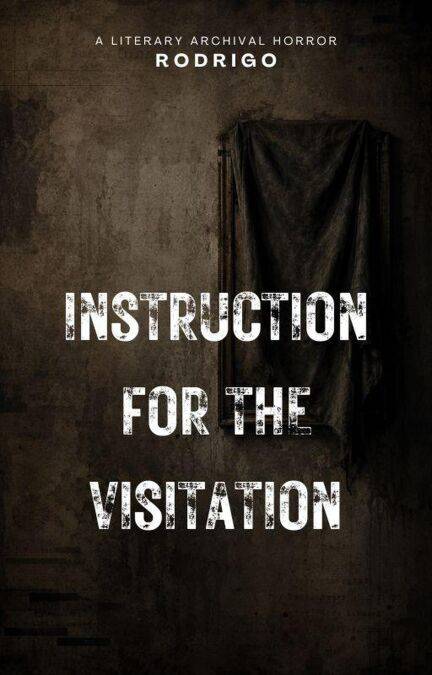
An anthropologist vanished after studying old household rules: never answer a familiar voice from outside after dark, cover mirrors during wakes, do not correct a name spoken wrongly by the dead.
Years later, his field notes are recovered.
At first, Instructions for the Visitation appears to be a scholarly archive: interviews with elders, parish records, translation disputes, medical evaluations, fragments of suppressed babaylan-associated rites. The documents are damaged, contradictory, and carefully edited. They concern "visitation," an imperfect word for something older than haunting, older than folklore, and far more dangerous than belief.
Because belief is not what invites it.
Recognition does.
As the archive unfolds, ordinary customs begin to form a procedure. A mistranslated prayer becomes a lock. A covered mirror becomes a refusal. A wrong name becomes protection. The dead may not be the only things that return, and the most dangerous act is not summoning them, but understanding how they arrive.
The editors warn that these materials were never meant to exist in written form. They preserve the fragments anyway.
Now the reader has them.
And some instructions do not need to be spoken aloud to be followed.
Spécifications
Parties prenantes
- Auteur(s) :
- Editeur:
Contenu
- Langue:
- Anglais
Caractéristiques
- EAN:
- 9798235415959
- Date de parution :
- 24-05-26
- Format:
- Ebook
- Protection digitale:
- /
- Format numérique:
- ePub


Seulement chez Librairie Club
+ 4 points sur votre carte client de Librairie Club
Cadeau


Les avis
Nous publions uniquement les avis qui respectent les conditions requises. Consultez nos conditions pour les avis.