


- Retrait en 2 heures
- Assortiment impressionnant
- Paiement sécurisé
- Toujours un magasin près de chez vous
- Retrait en 2 heures
- Assortiment impressionnant
- Paiement sécurisé
- Toujours un magasin près de chez vous



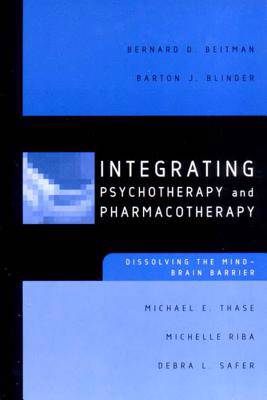
Integrating Psychotherapy and Pharmacotherapy
Dissolving the Mind-Brain Barrier
Bernard D Beitman, Barton J Blinder, Michael E Thase, Debra L Safer
53,00 €
+ 106 points
Description
This book invites the reader to participate in a major initiative of the 21st century: dissolving Cartesian mind-brain dualism.
This book will help all mental health clinicians to dissolve their conceptual mind/brain barriers by recognizing the reciprocal influences of psychological and pharmacological interventions. This task is approached by challenging the reader to respond to thought-provoking questions and problematic case vignettes in the following subject areas: combined treatment research, pharmacotherapy during psychotherapy, psychotherapy during pharmacotherapy, the pharmacotherapy-psychotherapy triangle and integrated treatment algorithms. Each of these homework-based sections is introduced by a brief overview. Part I invites the reader to an overview of these many issues. Topics covered include: 1) research in combined treatments, 2) pharmacotherapy during psychotherapy, 3) psychotherapeutic aspects of pharmacotherapy, 4) the pharmacotherapy-psychotherapy triangle, 5) treatment algorithms for combined treatments, and 6) the neurobiology of psychotherapy. With thought-provoking questions and vignettes of problematic cases, the authors invite readers to participate in working out these complicated issues. Part II provides cutting edge information on issues of integrated and split treatment and psychodynamic neurobiology. Answers to the problems are provided at the end of the book. Two additional chapters thoroughly review the research in combined treatments and what is known about the neurobiology of psychotherapy.
This book will help all mental health clinicians to dissolve their conceptual mind/brain barriers by recognizing the reciprocal influences of psychological and pharmacological interventions. This task is approached by challenging the reader to respond to thought-provoking questions and problematic case vignettes in the following subject areas: combined treatment research, pharmacotherapy during psychotherapy, psychotherapy during pharmacotherapy, the pharmacotherapy-psychotherapy triangle and integrated treatment algorithms. Each of these homework-based sections is introduced by a brief overview. Part I invites the reader to an overview of these many issues. Topics covered include: 1) research in combined treatments, 2) pharmacotherapy during psychotherapy, 3) psychotherapeutic aspects of pharmacotherapy, 4) the pharmacotherapy-psychotherapy triangle, 5) treatment algorithms for combined treatments, and 6) the neurobiology of psychotherapy. With thought-provoking questions and vignettes of problematic cases, the authors invite readers to participate in working out these complicated issues. Part II provides cutting edge information on issues of integrated and split treatment and psychodynamic neurobiology. Answers to the problems are provided at the end of the book. Two additional chapters thoroughly review the research in combined treatments and what is known about the neurobiology of psychotherapy.
Spécifications
Parties prenantes
- Auteur(s) :
- Editeur:
Contenu
- Nombre de pages :
- 240
- Langue:
- Anglais
- Collection :
Caractéristiques
- EAN:
- 9780393704037
- Date de parution :
- 17-03-03
- Format:
- Livre broché
- Format numérique:
- Trade paperback (VS)
- Dimensions :
- 154 mm x 237 mm
- Poids :
- 371 g


Seulement chez Librairie Club
+ 106 points sur votre carte client de Librairie Club
Cadeau


Les avis
Nous publions uniquement les avis qui respectent les conditions requises. Consultez nos conditions pour les avis.