


- Retrait en 2 heures
- Assortiment impressionnant
- Paiement sécurisé
- Toujours un magasin près de chez vous
- Retrait en 2 heures
- Assortiment impressionnant
- Paiement sécurisé
- Toujours un magasin près de chez vous



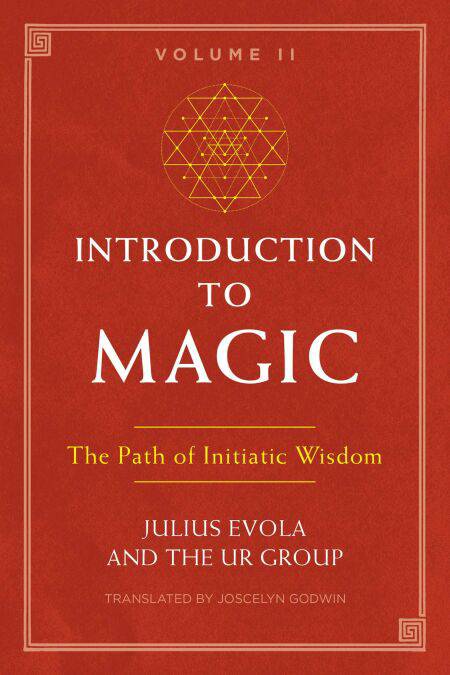
Introduction to Magic, Volume II EBOOK
The Path of Initiatic Wisdom
Julius Evola, The UR Group
Ebook | Anglais
20,12 €
+ 20 points
Description
Authentic initiatic practices, rituals, and wisdom collected by the UR Group
• Shares a rigorous selection of initiatory exercises, including instructions for creating the diaphanous body of the Opus magicum, establishing initiatic consciousness after death, and the construction of magical chains (the enchained awareness of initiates)
• Offers studies of mystery traditions throughout history, presenting not only the principles themselves but also witnesses to them and their continual validity today
The “Gruppo di UR” was a group of Italian esotericists who collaborated from 1927 to 1929. The purpose of this group was to study and practice ancient rituals gleaned from the mystery traditions of the world, both East and West, in order to attain a state of superhuman consciousness and power to allow them to act magically on the world. They produced a monthly journal containing techniques for spiritual realization, accounts of personal experiences, translations of ancient texts, and original essays on esoteric topics. The group included a distinguished line-up of occultists, neo-pagans, freemasons, Anthroposophists, orientalists, poets, and members of high society. The prime movers of the group were Arturo Reghini (1878-1946), a Pythagorean mathematician and reviver of a spiritual Freemasonry, and Julius Evola (1898-1974), then a young philosopher with a precocious mastery of the esoteric doctrines of East and West. Many years later, in 1971, Evola gathered these essays into three volumes. Inner Traditions published Volume I in 2001, under the title Introduction to Magic: Rituals and Practical Techniques for the Magus.
This volume, the second in the series, complements the first one, yet they are not strictly sequential, and their contents can be read in any order. Volume II shares authentic initiatic wisdom and a rigorous selection of initiatory exercises, including instructions for creating the diaphanous body of the Opus magicum, establishing initiatic consciousness after death, and the construction of magical chains (the enchained awareness of initiates). It offers studies of mystery traditions throughout history, presenting not only the principles themselves but also witnesses to them and their continual validity today.
This series shows that the “Magic” of the UR Group meant an active and affirmative attitude toward individual development, handed down from a “primordial tradition” and discernable in alchemy, Hermetism, esoteric religious doctrines, indigenous practices, Tantra, Taoism, Buddhism, Vedanta, and the pagan mysteries of the West. Although some of the practical experiments demanded extraordinary efforts, both individual and collective, there is incalculable value here even for the less heroic, for merely reading these essays leaves a permanent mark on the reader.
• Shares a rigorous selection of initiatory exercises, including instructions for creating the diaphanous body of the Opus magicum, establishing initiatic consciousness after death, and the construction of magical chains (the enchained awareness of initiates)
• Offers studies of mystery traditions throughout history, presenting not only the principles themselves but also witnesses to them and their continual validity today
The “Gruppo di UR” was a group of Italian esotericists who collaborated from 1927 to 1929. The purpose of this group was to study and practice ancient rituals gleaned from the mystery traditions of the world, both East and West, in order to attain a state of superhuman consciousness and power to allow them to act magically on the world. They produced a monthly journal containing techniques for spiritual realization, accounts of personal experiences, translations of ancient texts, and original essays on esoteric topics. The group included a distinguished line-up of occultists, neo-pagans, freemasons, Anthroposophists, orientalists, poets, and members of high society. The prime movers of the group were Arturo Reghini (1878-1946), a Pythagorean mathematician and reviver of a spiritual Freemasonry, and Julius Evola (1898-1974), then a young philosopher with a precocious mastery of the esoteric doctrines of East and West. Many years later, in 1971, Evola gathered these essays into three volumes. Inner Traditions published Volume I in 2001, under the title Introduction to Magic: Rituals and Practical Techniques for the Magus.
This volume, the second in the series, complements the first one, yet they are not strictly sequential, and their contents can be read in any order. Volume II shares authentic initiatic wisdom and a rigorous selection of initiatory exercises, including instructions for creating the diaphanous body of the Opus magicum, establishing initiatic consciousness after death, and the construction of magical chains (the enchained awareness of initiates). It offers studies of mystery traditions throughout history, presenting not only the principles themselves but also witnesses to them and their continual validity today.
This series shows that the “Magic” of the UR Group meant an active and affirmative attitude toward individual development, handed down from a “primordial tradition” and discernable in alchemy, Hermetism, esoteric religious doctrines, indigenous practices, Tantra, Taoism, Buddhism, Vedanta, and the pagan mysteries of the West. Although some of the practical experiments demanded extraordinary efforts, both individual and collective, there is incalculable value here even for the less heroic, for merely reading these essays leaves a permanent mark on the reader.
Spécifications
Parties prenantes
- Auteur(s) :
- Traducteur(s):
- Editeur:
Contenu
- Nombre de pages :
- 448
- Langue:
- Anglais
Caractéristiques
- EAN:
- 9781620557181
- Date de parution :
- 11-03-19
- Format:
- Ebook
- Protection digitale:
- Adobe DRM
- Format numérique:
- ePub


Seulement chez Librairie Club
+ 20 points sur votre carte client de Librairie Club
Cadeau


Les avis
Nous publions uniquement les avis qui respectent les conditions requises. Consultez nos conditions pour les avis.