


- Retrait en 2 heures
- Assortiment impressionnant
- Paiement sécurisé
- Toujours un magasin près de chez vous
- Retrait en 2 heures
- Assortiment impressionnant
- Paiement sécurisé
- Toujours un magasin près de chez vous



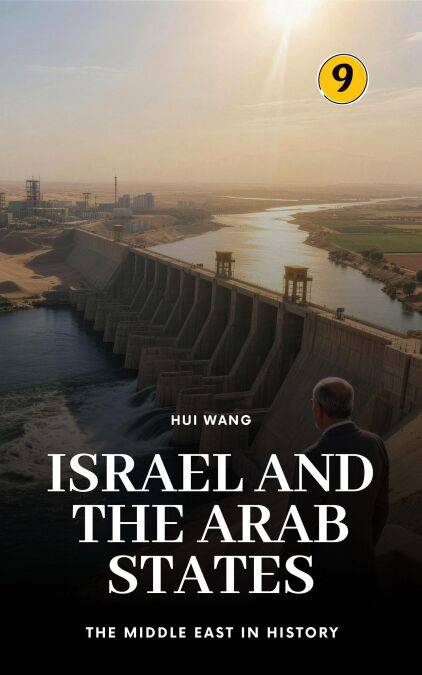
Israel and the Arab States: The Middle East in History EBOOK
The Middle East in History, #9
Hui Wang
6,99 €
+ 6 points
Description
Israel and the Arab States: The Middle East in History, is the book I wrote to tell this story through people, not slogans. It begins on November 29, 1947 — the day the UN vote upended the region overnight — and follows the raw emotions that carried populations from tears into open warfare. From that first turning point I trace how decisions made in cramped, tense rooms by a handful of leaders reshaped the lives of millions, often in ways that moved far faster than anyone expected.
You'll walk alongside figures such as Chaim Weizmann — accompanying him on what would become one of his final missions — and Golda Meir, who moved between diplomacy and sheer survival with almost no margin for error. You'll watch King Abdullah of Jordan and the Arab Legion calculating their moves, and you'll sit in on a tense, secret meeting between Golda Meir and King Abdullah, where hopes, fears, and hard limits collided. This book shows how close the region came to very different outcomes — and how quickly those opportunities slipped away.
War sits at the heart of the tale — but not as some distant abstraction. Groups like Irgun and Lehi expose the darker, more personal side of 1948, and the fight for survival plays out not only on dusty roads and ruined villages but in the skies above. From the Avia S-199 fighters that Czechoslovakia sold to the fledgling Israeli air arm to the ragged, first air battles that taught a new air force to live or die, you encounter figures such as David "Mickey" Marcus, Moshe Dayan, and Ariel Sharon at moments when they were still learning their trade, improvising under pressure, and making decisions that would shape the rest of their lives.
Then the lens swings outward to the wider Arab world. Husni al-Za'im bursts onto the Syrian scene in the 1949 coup that announced a new, more militarized chapter in Syrian politics. In Egypt, the long shadow of Saad Zaghloul — a hero of earlier nationalist struggles — and the rise of Hassan al-Banna and the Muslim Brotherhood help explain why secular nationalism and political Islam often grew side by side. And King Farouk, living with little restraint, comes to personify a monarchy that had lost touch with reality — a rotten, scandal-prone throne that would soon collapse and clear the ground for revolution.
The final chapters trace Egypt's transformation and the ripple effects across the region. Gamal Abdel Nasser, Muhammad Naguib, and the Free Officers toppled the old monarchy in the 1952 revolution, challenged Britain—culminating in the nationalization of the Suez Canal—and pulled Washington into the story as the United States moved from Harry Truman to Dwight Eisenhower. The violence and attempted assassinations around Alexandria in 1954, the wrenching struggle for power inside the new republic, and the diplomatic and strategic battle over the Aswan High Dam show how Egypt's fate became inseparable from the wider Cold War.
Spécifications
Parties prenantes
- Auteur(s) :
- Editeur:
Contenu
- Langue:
- Anglais
- Collection :
Caractéristiques
- EAN:
- 9789190115909
- Date de parution :
- 08-01-26
- Format:
- Ebook
- Protection digitale:
- /
- Format numérique:
- ePub


Seulement chez Librairie Club
+ 6 points sur votre carte client de Librairie Club
Cadeau


Les avis
Nous publions uniquement les avis qui respectent les conditions requises. Consultez nos conditions pour les avis.