


- Retrait en 2 heures
- Assortiment impressionnant
- Paiement sécurisé
- Toujours un magasin près de chez vous
- Retrait en 2 heures
- Assortiment impressionnant
- Paiement sécurisé
- Toujours un magasin près de chez vous



132,50 €
+ 265 points
Description
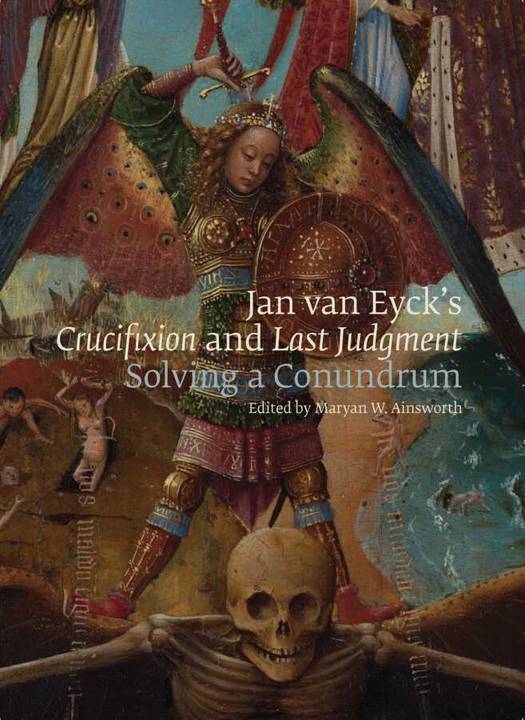
Among the most intriguing and confounding works of Jan van Eyck's oeuvre are the Crucifixion and Last Judgment in New York's Metropolitan Museum of Art. Although acquired in 1933 as a diptych, questions have remained about their initial configuration, and how these paintings functioned. The recent technical investigations of the paintings and their original frames added further complexities to these inquiries when a fragmentary text in Middle Dutch was discovered through X-radiography on the frames surrounding the two paintings. The many facets of the ensuing investigation necessitated an interdisciplinary collaboration of researchers involving an art historian, paintings conservator, and museum scientist - namely, Maryan Ainsworth, Sophie Scully, and Silvia Centeno. Moreover, the new discovery of the formerly hidden text called for the enrichment of the interdisciplinary team by a paleographer and a classical philologist, Marc Smith and Christina Meckelnborg. This book relates the unfolding story of the investigations from in-depth technical research, facilitating the conservation treatment of the frames, to the art historical study that connected these findings to the religious, political, and social contexts of the times. Through considerable interdisciplinary detective work, it was possible to reach a new understanding about the original form and function of the Crucifixion and Last Judgment and their pivotal role concerning devotions to a cherished relic, the Miraculous Bleeding Host, housed in the then collegiate church of Saint Michael and Saint Gudula in Brussels. The implications of these discoveries also shed new light on the relationship between The Met Crucifixion and Van Eyck's metalpoint drawing of the same theme in the Museum Boijmans Van Beuningen, Rotterdam. Finally, the study of the Crucifixion and the Last Judgment draws attention to commissions Van Eyck received that are somewhat outside of the canon of works usually associated with this esteemed artist.
Spécifications
Parties prenantes
- Auteur(s) :
- Editeur:
Contenu
- Nombre de pages :
- 195
- Langue:
- Anglais
- Collection :
- Tome:
- n° 13
Caractéristiques
- EAN:
- 9782503596907
- Date de parution :
- 27-10-22
- Format:
- Livre relié
- Format numérique:
- Genaaid
- Dimensions :
- 165 mm x 234 mm
- Poids :
- 1587 g


Seulement chez Librairie Club
+ 265 points sur votre carte client de Librairie Club
Cadeau


Les avis
Nous publions uniquement les avis qui respectent les conditions requises. Consultez nos conditions pour les avis.