


- Retrait en 2 heures
- Assortiment impressionnant
- Paiement sécurisé
- Toujours un magasin près de chez vous
- Retrait gratuit dans votre magasin Club
- 7.000.0000 titres dans notre catalogue
- Payer en toute sécurité
- Toujours un magasin près de chez vous


Description
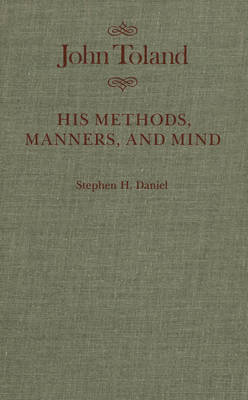
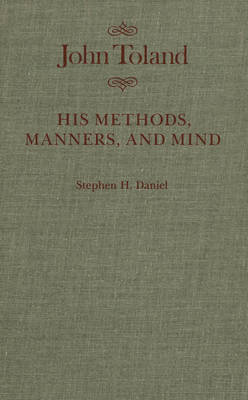
This study is the first sympathetic philosophical treatment in English of the complete works of John Toland (1670-1722). Professor Daniel presents Toland as a champion of religious toleration and civil liberty whose writing is important because it brings together many of the ideas, themes, and controversies that dominated the early modern period in Europe. Best known for his call for common-sense thinking in the deist manifesto Christianity Not Mysterious, Toland gained notoriety as editor and biographer of Milton, Harrington, and Ludlow; translator and publicist of Giordano Bruno; pamphleteer and spy for Robert Harley, and purveyor of Hermetic and clandestine manuscripts for Prince Eugène of Savoy. A self-proclaimed atheist, he amused, annoyed, and embarrased such personal acquaintances as Locke, Swift, Bayle, Leibniz, Shaftesbury, and Sophie Charlotte of Prussia. His works on biblical criticism, philosophical materialism, and the Druids became sources for Diderot and Holbach; and historians of Freemasonry and of English political and diplomatic affairs continue to search for keys to the intrigue that surrounded him. Drawing on a variety of published and unpublished material representing Toland's broad interests, Professor Daniel reveals a common theme emphasizing man's capacity for independent thought on basic philosophical, religious, and political issues. Roughly chronological, Daniel's treatment describes Toland's progressive refinement of this fundamental aspect of his thought. After examining, in his early works, the process whereby religion becomes mystified, Toland turned to biography, demonstrating that through it one can regain rational control over religion. Prejudices and superstitions, topics of the Letters to Serena, are shown to be overcome through corrections implicit in the principles of biographical and historical exegesis. Polemic as philosophic methode required Toland to provide a doctrine of esoteric communication. In the course of his later writings this doctrine became grounded in a metaphysics suitable for the Cieronian religion of the pantheists.
Spécifications
Parties prenantes
- Auteur(s) :
- Editeur:
Contenu
- Nombre de pages :
- 277
- Langue:
- Anglais
- Collection :
Caractéristiques
- EAN:
- 9780773510074
- Date de parution :
- 01-10-84
- Format:
- Livre relié
- Format numérique:
- Genaaid
- Dimensions :
- 155 mm x 235 mm
- Poids :
- 535 g


Seulement chez Librairie Club
+ 344 points sur votre carte client de Librairie Club
Cadeau

Cadeau


Les avis
Nous publions uniquement les avis qui respectent les conditions requises. Consultez nos conditions pour les avis.