


- Retrait en 2 heures
- Assortiment impressionnant
- Paiement sécurisé
- Toujours un magasin près de chez vous
- Retrait en 2 heures
- Assortiment impressionnant
- Paiement sécurisé
- Toujours un magasin près de chez vous



16,76 €
+ 16 points
Format
Description
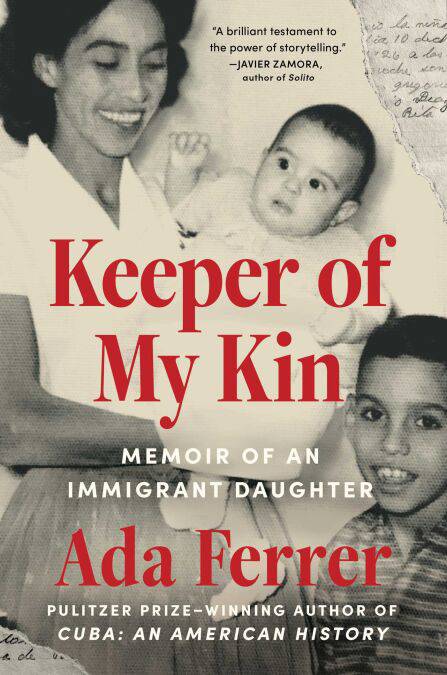
From the Pulitzer Prize–winning author of Cuba: An American History comes a heartbreaking yet redemptive memoir about migration, separation, and the love of one family forcing its way through the fissures of history.
In 1963, four years after Fidel Castro came to power, Ada Ferrer’s mother made the agonizing decision to flee Cuba with her infant daughter, Ada, and to leave behind her nine-year-old son, Poly. That moment was but a ripple in a much larger story of a world historical revolution. Yet, in another more intimate family history, that choice was a crossroads, ultimately inseparable from who and what they all became.
In this beautiful memoir, Ferrer masterfully shifts between her roles as historian and family member, weaving a multigenerational tale that reaches into the past to understand the circumstances and choices that led to the present. We see key historical events through the eyes of the family: the grandmother who raised Poly after Ada’s departure, a Black woman born a year after the end of slavery in Cuba; Ada’s parents, forced to invent themselves anew in a foreign land; and two brothers left behind—Poly and another, once-secret brother named Juan José, both of whose lives were marked irrevocably by revolution and family separation. Moving between Cuba and the United States and then back again, the book unpacks the experience and emotion of migration, in the moment of separation and over the long-term, for those who left and those who stayed.
Using a treasure trove of letters written across the gulf of family separation and found after the death of Ada’s parents, as well as government documents acquired through Freedom of Information Act requests, Ferrer offers us a profound reflection on belonging, memory, and the lasting imprint of history.
In 1963, four years after Fidel Castro came to power, Ada Ferrer’s mother made the agonizing decision to flee Cuba with her infant daughter, Ada, and to leave behind her nine-year-old son, Poly. That moment was but a ripple in a much larger story of a world historical revolution. Yet, in another more intimate family history, that choice was a crossroads, ultimately inseparable from who and what they all became.
In this beautiful memoir, Ferrer masterfully shifts between her roles as historian and family member, weaving a multigenerational tale that reaches into the past to understand the circumstances and choices that led to the present. We see key historical events through the eyes of the family: the grandmother who raised Poly after Ada’s departure, a Black woman born a year after the end of slavery in Cuba; Ada’s parents, forced to invent themselves anew in a foreign land; and two brothers left behind—Poly and another, once-secret brother named Juan José, both of whose lives were marked irrevocably by revolution and family separation. Moving between Cuba and the United States and then back again, the book unpacks the experience and emotion of migration, in the moment of separation and over the long-term, for those who left and those who stayed.
Using a treasure trove of letters written across the gulf of family separation and found after the death of Ada’s parents, as well as government documents acquired through Freedom of Information Act requests, Ferrer offers us a profound reflection on belonging, memory, and the lasting imprint of history.
Spécifications
Parties prenantes
- Auteur(s) :
- Editeur:
Contenu
- Nombre de pages :
- 384
- Langue:
- Anglais
Caractéristiques
- EAN:
- 9781668025673
- Date de parution :
- 18-05-26
- Format:
- Ebook
- Protection digitale:
- Adobe DRM
- Format numérique:
- ePub



Seulement chez Librairie Club
+ 16 points sur votre carte client de Librairie Club
Cadeau


Les avis
Nous publions uniquement les avis qui respectent les conditions requises. Consultez nos conditions pour les avis.