


- Retrait en 2 heures
- Assortiment impressionnant
- Paiement sécurisé
- Toujours un magasin près de chez vous
- Retrait en 2 heures
- Assortiment impressionnant
- Paiement sécurisé
- Toujours un magasin près de chez vous



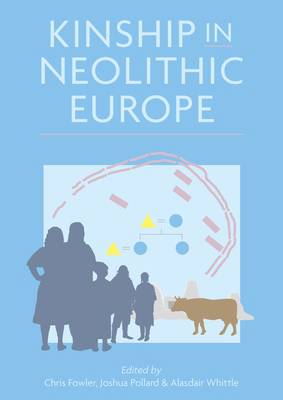
Kinship in Neolithic Europe
121,45 €
+ 242 points
Description
Explores Neolithic kinship across Europe, integrating archaeology and aDNA to examine biological and social relationships.
This title, the next in the Neolithic Studies Group Seminar Papers series, presents a selection of case studies from across Neolithic continental Europe, Britain and Ireland as examples of recent and ongoing archaeological research on kinship.
Kinship has often been seen as central to how many societies operated in the past, and there is a very long and complex history of research on it in anthropology. Debate actively continues, centred around whether kinship is essentially a matter of biology or should be seen as a social construct, or some combination of the two. Until fairly recently, archaeology has done very little in detail with kinship, despite its probably central importance in past social relations. The recent development of aDNA research has changed things fundamentally, with prolific studies indicating, for the Neolithic, diverse situations where biological relatedness can be documented, but also others where biological relatedness is either absent or not so prominent. Neolithic studies therefore face the challenge of coming to terms with evident diversity and needing to find nuanced interpretative approaches to kinship; they also have the opportunity to begin to chart detailed trajectories of change.
The coverage of the book will illustrate diversity across time and space, as well as exploring the many approaches now possible to the significance of kinship. It will help to give the archaeological reader a reflective and nuanced understanding of the very broad range of possible approaches to the study of kinship in the past. This is the only book on kinship focusing exclusively on Neolithic Europe, offering readers a wide sample of current and ongoing research across Europe. It will reflect on combining a broad range of evidence; while most of the chapters will be concerned with depositions in the mortuary sphere, and some will make use of aDNA data derived from that sphere, contributions will also cover other dimensions of practice, including settlements, architecture, and material culture.
This title, the next in the Neolithic Studies Group Seminar Papers series, presents a selection of case studies from across Neolithic continental Europe, Britain and Ireland as examples of recent and ongoing archaeological research on kinship.
Kinship has often been seen as central to how many societies operated in the past, and there is a very long and complex history of research on it in anthropology. Debate actively continues, centred around whether kinship is essentially a matter of biology or should be seen as a social construct, or some combination of the two. Until fairly recently, archaeology has done very little in detail with kinship, despite its probably central importance in past social relations. The recent development of aDNA research has changed things fundamentally, with prolific studies indicating, for the Neolithic, diverse situations where biological relatedness can be documented, but also others where biological relatedness is either absent or not so prominent. Neolithic studies therefore face the challenge of coming to terms with evident diversity and needing to find nuanced interpretative approaches to kinship; they also have the opportunity to begin to chart detailed trajectories of change.
The coverage of the book will illustrate diversity across time and space, as well as exploring the many approaches now possible to the significance of kinship. It will help to give the archaeological reader a reflective and nuanced understanding of the very broad range of possible approaches to the study of kinship in the past. This is the only book on kinship focusing exclusively on Neolithic Europe, offering readers a wide sample of current and ongoing research across Europe. It will reflect on combining a broad range of evidence; while most of the chapters will be concerned with depositions in the mortuary sphere, and some will make use of aDNA data derived from that sphere, contributions will also cover other dimensions of practice, including settlements, architecture, and material culture.
Spécifications
Parties prenantes
- Editeur:
Contenu
- Nombre de pages :
- 256
- Langue:
- Anglais
- Collection :
Caractéristiques
- EAN:
- 9798888572740
- Date de parution :
- 18-12-26
- Format:
- Livre broché
- Format numérique:
- Trade paperback (VS)
- Dimensions :
- 170 mm x 239 mm

Seulement chez Librairie Club
+ 242 points sur votre carte client de Librairie Club
Cadeau


Les avis
Nous publions uniquement les avis qui respectent les conditions requises. Consultez nos conditions pour les avis.