


- Retrait en 2 heures
- Assortiment impressionnant
- Paiement sécurisé
- Toujours un magasin près de chez vous
- Retrait en 2 heures
- Assortiment impressionnant
- Paiement sécurisé
- Toujours un magasin près de chez vous



201,45 €
+ 402 points
Description
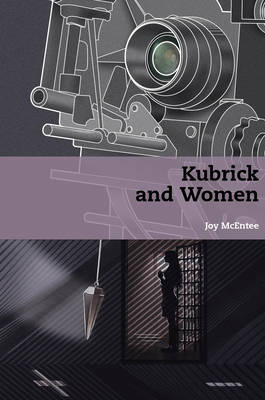
It is a commonplace to say that Stanley Kubrick's cinema is a world of men created by a man for men. And yet, as Kubrick and Women argues, women are central to Kubrick's films, if often only as paradoxically phobic objects of desire. The centrality of women is well camouflaged, to be sure, by Kubrick's focus on male fear. As Michael Herr observed, it takes a great respect for women to make them as dangerous as Kubrick sometimes did.
Kubrick and Women responds to a question asked by Stella Louis: 'what if women were the main character(s) in Stanley Kubrick's films?'. It argues that Kubrick cannot comfortably be labelled either a feminist or a misogynist. The book does not damn Kubrick for misogyny nor rescue him from accusations of it but mobilizes Tania Modleski's insight about Hitchcock, 'the misogyny and the sympathy actually entail one another', and applies it to Kubrick. This is, obviously, to yoke together contradictions, but this yoking creates an unease and ambiguity that renders complex truths about the relationships between men and women.
Spécifications
Parties prenantes
- Auteur(s) :
- Editeur:
Contenu
- Nombre de pages :
- 240
- Langue:
- Anglais
- Collection :
Caractéristiques
- EAN:
- 9781805968641
- Date de parution :
- 14-08-2026
- Format:
- Livre relié
- Format numérique:
- Genaaid
- Dimensions :
- 164 mm x 240 mm


Seulement chez Librairie Club
+ 402 points sur votre carte client de Librairie Club
Cadeau


Les avis
Nous publions uniquement les avis qui respectent les conditions requises. Consultez nos conditions pour les avis.