


- Retrait en 2 heures
- Assortiment impressionnant
- Paiement sécurisé
- Toujours un magasin près de chez vous
- Retrait en 2 heures
- Assortiment impressionnant
- Paiement sécurisé
- Toujours un magasin près de chez vous



Description
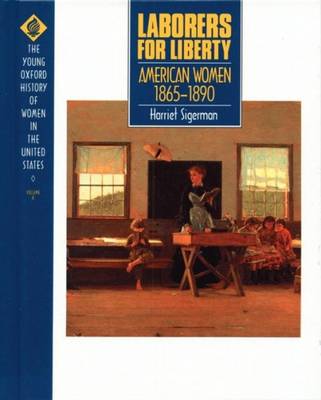
In the years following the Civil War, women in the United States took up many new roles and their impact on the nation became ever more visible. As new territories were settled and the country began to heal its wounds, great industrial expansion brought changes in women's occupations, education, and activities. The sharecroppers who labored in the fields of the South, migrants who put down roots in the Great Plains, immigrants who sought opportunities in the ever-swelling cities, the first generation of young women to attend universities--all were part of the changing American landscape.
Although women were expected to serve their families, communities, and the country by being good wives and mothers, their activities actually extended far beyond the home. After the Civil War, women organized to work toward civic, social, and religious improvement. They devoted themselves to a wide range of issues and causes--ending alcoholism, preventing violence against women, helping young farm women adjust to city life, increasing women's educational opportunities, and--above all--obtaining the vote for women. These were crucial stepping-stones in women's quest for social and political power.
Susan B. Anthony, Elizabeth Cady Stanton, Sojourner Truth, and Jane Addams are but a few of the women whose struggles for women's rights are chronicled in Laborers for Liberty. But the stories of women whose names are not familiar are also recorded. Each waged her own battle for liberty in the home, on the farm, and in the factory, as American women began to take greater control over their lives and to lay the groundwork for 20th-century feminism.
Although women were expected to serve their families, communities, and the country by being good wives and mothers, their activities actually extended far beyond the home. After the Civil War, women organized to work toward civic, social, and religious improvement. They devoted themselves to a wide range of issues and causes--ending alcoholism, preventing violence against women, helping young farm women adjust to city life, increasing women's educational opportunities, and--above all--obtaining the vote for women. These were crucial stepping-stones in women's quest for social and political power.
Susan B. Anthony, Elizabeth Cady Stanton, Sojourner Truth, and Jane Addams are but a few of the women whose struggles for women's rights are chronicled in Laborers for Liberty. But the stories of women whose names are not familiar are also recorded. Each waged her own battle for liberty in the home, on the farm, and in the factory, as American women began to take greater control over their lives and to lay the groundwork for 20th-century feminism.
Spécifications
Parties prenantes
- Auteur(s) :
- Editeur:
Contenu
- Nombre de pages :
- 144
- Langue:
- Anglais
- Collection :
- Tome:
- n° 6
Caractéristiques
- EAN:
- 9780195080469
- Date de parution :
- 23-06-94
- Format:
- Livre relié
- Format numérique:
- Genaaid
- Dimensions :
- 199 mm x 244 mm
- Poids :
- 512 g



Seulement chez Librairie Club
+ 84 points sur votre carte client de Librairie Club
Cadeau


Les avis
Nous publions uniquement les avis qui respectent les conditions requises. Consultez nos conditions pour les avis.