


- Retrait en 2 heures
- Assortiment impressionnant
- Paiement sécurisé
- Toujours un magasin près de chez vous
- Retrait en 2 heures
- Assortiment impressionnant
- Paiement sécurisé
- Toujours un magasin près de chez vous



7,99 €
+ 7 points
Format
Description
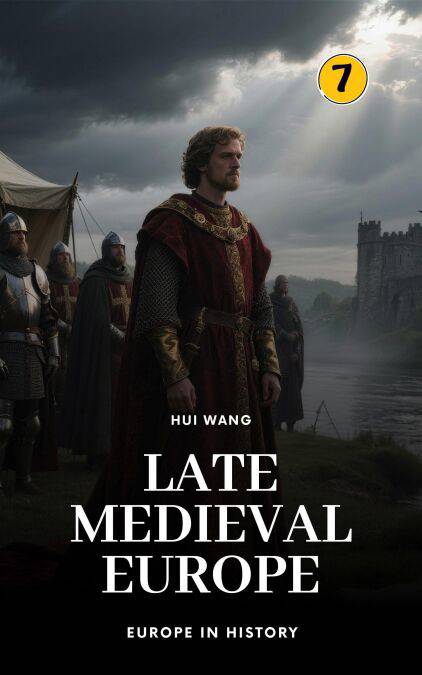
Late Medieval Europe: Europe in History, PART ONE, tells the story I wanted to tell — a world carved by bold rulers and relentless reformers. Picture Gregory VII at the heart of the Investiture struggle and, further down the line, Henry V negotiating the Concordat of Worms (1122 CE); imagine Nicholas II securing the Treaty of Melfi (1059 CE) and Urban II calling knights to Clermont (1095 CE). The tale opens in 1054 CE, the year traditionally marked as the East–West Schism — a turning point when empires and churches began to head in visibly different directions — and it follows the clash between throne and altar through dramatic moments like the Humiliation of Canossa (1077 CE), where politics and faith collided in unforgettable ways.
As the narrative pushes eastward, readers encounter crusading leaders, Venetian merchants woven into dangerous bargains, and papal strategists plotting power on a continental scale. The birth of the Crusader Kingdoms after 1099 CE, Venice's dramatic—and often self-interested—role in the Fourth Crusade (1204 CE), and the shock of Ain Jalut (1260 CE) all surface alongside towering figures such as Innocent III, whose Fourth Lateran Council (1215 CE) reshaped the medieval church. His ascent and eventual waning make plain how fragile even the greatest authority could be in a Europe where alliances shifted as quickly and unpredictably as the tide.
Ideas and power move in tandem across the pages. Thomas Aquinas rises within the universities at precisely the moment scholasticism begins to reshape intellectual life, while emperors and popes wrestle over the true limits of their authority. The political map widens under figures like Eleanor of Aquitaine and Henry II, and in the age of Philip II — specifically Philip II Augustus of France — a span of history that runs from the sieges at Acre during the Third Crusade to the decisive clash at Bouvines, turning the rivalry between France and England into one of the Middle Ages' defining dramas.
England's transformation then takes center stage. From the forging of the English realm under William the Conqueror after the Norman Conquest of 1066 CE, through the vast expansion of the Plantagenet inheritance under Henry II, the narrative traces how power flowed between Normandy, the French crown and the papacy. Men like King John stand at the eye of those storms — squeezed by French ambitions and by papal pressure, struggling to hold a fragile kingdom together.
I wrote this book to feel like a living epic rather than a distant lecture. It tracks the arc from crusading campaigns and thunderous church councils to the sealing of the Magna Carta and the slow forging of common law, showing how choices made by figures such as Pope Gregory VII, Pope Innocent III, King Henry II of England, King Philip II of France, and King John still ripple through modern law and politics.
Spécifications
Parties prenantes
- Auteur(s) :
- Editeur:
Contenu
- Langue:
- Anglais
- Collection :
Caractéristiques
- EAN:
- 9789190150245
- Date de parution :
- 15-02-26
- Format:
- Ebook
- Protection digitale:
- /
- Format numérique:
- ePub


Seulement chez Librairie Club
+ 7 points sur votre carte client de Librairie Club
Cadeau


Les avis
Nous publions uniquement les avis qui respectent les conditions requises. Consultez nos conditions pour les avis.