


- Retrait en 2 heures
- Assortiment impressionnant
- Paiement sécurisé
- Toujours un magasin près de chez vous
- Retrait en 2 heures
- Assortiment impressionnant
- Paiement sécurisé
- Toujours un magasin près de chez vous



25,95 €
+ 51 points
Description
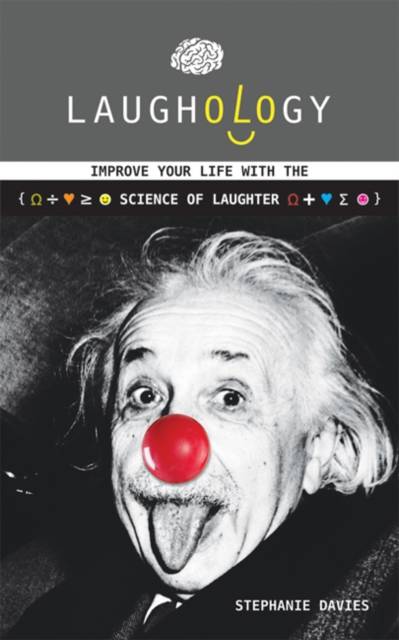
From those first baby giggles, we begin to use laughter. It can be used to make us popular and it can be used as an emotional release mechanism. Whilst we are born with the physical ability to laugh, the capacity to utilise it as a social tool is something we learn. And in order to do this, we need to develop a sense of humour. Stephanie Davies is one of the country's preeminent laughter experts. A former stand-up comedian, she studied the science of laughter and founded Laughology, a unique enterprise which teaches individuals in the public and private sectors how to enhance their potential through laughter and humour. She has over ten years' experience of developing interventions that have been applied in a wide variety of settings dealing with complex public and mental health issues and building teams in high profile organisations. The book explains simple techniques that will improve the reader's ability to gain a morepositive perspective in difficult situations and increase his or her happiness through adopting the techniques from the Laughology model.The key subjects covered are: What is laughter? What is humour? The psychological connection What makes us laugh and how to find your humour trigger Your inner child - the natural comedian Appropriate humour and laughter The SMILE strategy How to find and sustain your giggleFor such an integral facet of humanity, the academic study of laughter and humour is still a relatively new field. Increasingly, however, experts are beginning to investigate the personal and social benefits of laughter. One of the best documented examples of the effect laughter can have on health involves the writer Norman Cousins, who was diagnosed with a debilitating spinal disease and given a one in 500 chance of survival in 1964. Rather than stay in hospital, he checked into a hotel where he took large doses of vitamin C and devised a treatment programme consisting of positive behaviours such as laughter, love and joy. He watched as much comedy as he could, including episodes of Candid Camera and The Marx Brothers movies and found that, over time, laughter stimulated chemicals in his body which allowed him several hours of pain-free sleep. He continued the treatment until, eventually, his disease went into remission and he was able to return to work. He wrote: I made the joyous discovery that 10 minutes of genuine belly laughter had an anaesthetic effect and would give me at least two hours of pain-free sleep.
Spécifications
Parties prenantes
- Auteur(s) :
- Editeur:
Contenu
- Nombre de pages :
- 160
- Langue:
- Anglais
Caractéristiques
- EAN:
- 9781845907921
- Date de parution :
- 24-09-13
- Format:
- Livre broché
- Format numérique:
- Trade paperback (VS)
- Dimensions :
- 135 mm x 215 mm
- Poids :
- 254 g


Seulement chez Librairie Club
+ 51 points sur votre carte client de Librairie Club
Cadeau


Les avis
Nous publions uniquement les avis qui respectent les conditions requises. Consultez nos conditions pour les avis.