


- Retrait en 2 heures
- Assortiment impressionnant
- Paiement sécurisé
- Toujours un magasin près de chez vous
- Retrait en 2 heures
- Assortiment impressionnant
- Paiement sécurisé
- Toujours un magasin près de chez vous



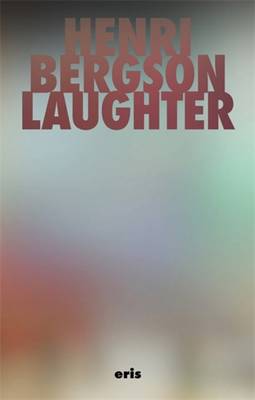
Description
Why do we laugh? What does comedy reveal about human nature, society, and the mind's strange elasticity?
In this classic 1900 essay, philosopher Henri Bergson anatomises the comic impulse with surgical clarity and lyrical wit. For Bergson, laughter is no mere reflex. It is a social gesture, a corrective, a way for life itself to defend its supple intelligence against rigidity and habit. From pratfalls to irony, from the mechanical in the living to the absurd in the everyday, his argument ranges effortlessly between metaphysics and vaudeville. With a new introduction by Simon Critchley, Laughter emerges as both a foundational text in aesthetics and a startlingly modern theory of humour--anticipating Freud, Chaplin, and memes alike. An appended essay by Wyndham Lewis offers a bracing counterpoint: a modernist's rejoinder to Bergson's genial philosophy. Together they trace the fault-lines between laughter and cruelty, vitality and violence, thought and form. A century on, Bergson's question still bites: what makes us laugh--and why does it matter?Spécifications
Parties prenantes
- Auteur(s) :
- Traducteur(s):
- Editeur:
Contenu
- Nombre de pages :
- 160
- Langue:
- Anglais
- Collection :
- Tome:
- n° 1
Caractéristiques
- EAN:
- 9781967751846
- Date de parution :
- 10-03-26
- Format:
- Livre broché
- Format numérique:
- Trade paperback (VS)
- Dimensions :
- 125 mm x 196 mm
- Poids :
- 163 g


Seulement chez Librairie Club
+ 59 points sur votre carte client de Librairie Club
Cadeau


Les avis
Nous publions uniquement les avis qui respectent les conditions requises. Consultez nos conditions pour les avis.