


En raison d'une grève chez bpost, des retards de livraison peuvent survenir. Besoin de quelque chose en urgence ? Optez pour un retrait en magasin ou rendez-vous dans une Librairie Club à proximité.
- Retrait en 2 heures
- Assortiment impressionnant
- Paiement sécurisé
- Toujours un magasin près de chez vous
En raison d'une grève chez bpost, des retards de livraison peuvent survenir. Besoin de quelque chose en urgence ? Optez pour un retrait en magasin ou rendez-vous dans une Librairie Club à proximité.
- Retrait en 2 heures
- Assortiment impressionnant
- Paiement sécurisé
- Toujours un magasin près de chez vous



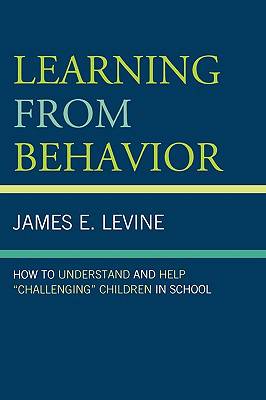
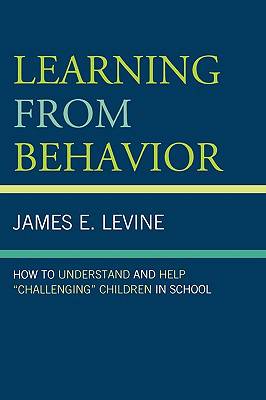
Description
Understanding children's problem behaviors in school-seeing beyond the surface actions to reveal and name the root needs fueling those actions-is vital to helping the child. Yet, whether teachers in schools or parents at home, adults often make quick, cursory assessments, then an intervention is sprung. Explanations might be sought from the child, who often resists and becomes more distant. Punishment can occur and things are "taken away," but the behavior worsens. These scenarios and similar occurrences frustrate parents, teachers, and other school professionals alike. In Learning from Behavior, Levine shows us how to observe, question, and think about problem behaviors in such a way that we can understand what is motivating the children to act as they do. Behavior, after all, often represents what the child cannot communicate, due to language limitations, level of psychological development, or traumatic experience. Children think differently; they are not small adults. We need to understand the behavior from the child's perspective before we can intervene to change the behavior. Author Levine shows us, incorporating illustrative vignettes, how to do that. Step by step, Levine, a clinical social worker experienced as a consultant to dozens of schools, helps us take the astute advice cited in one children's song we've all heard: "stop, look and listen," to first understand the behavior. Question the causes. Cases included in this book range from noncompliance and poor academic performance to disinhibition, suspected ADHD, PTSD, and injury-caused acting out. We hear about the history of behavioral interventions, listen as children tell us how they perceive these interventions, and look over the social worker's shoulder as effective helping strategies are put into action. As Levine explains, "Given the challenges we share communally in helping children, we should do everything possible to learn more about children's behavior, enhance our methods for reaching out to them, and refine our approaches to interve
Spécifications
Parties prenantes
- Auteur(s) :
- Editeur:
Contenu
- Nombre de pages :
- 150
- Langue:
- Anglais
Caractéristiques
- EAN:
- 9781578868049
- Date de parution :
- 16-04-09
- Format:
- Livre broché
- Format numérique:
- Trade paperback (VS)
- Dimensions :
- 150 mm x 226 mm
- Poids :
- 249 g


Seulement chez Librairie Club
+ 176 points sur votre carte client de Librairie Club
Cadeau


Les avis
Nous publions uniquement les avis qui respectent les conditions requises. Consultez nos conditions pour les avis.