


- Retrait en 2 heures
- Assortiment impressionnant
- Paiement sécurisé
- Toujours un magasin près de chez vous
- Retrait gratuit dans votre magasin Club
- 7.000.0000 titres dans notre catalogue
- Payer en toute sécurité
- Toujours un magasin près de chez vous



Description
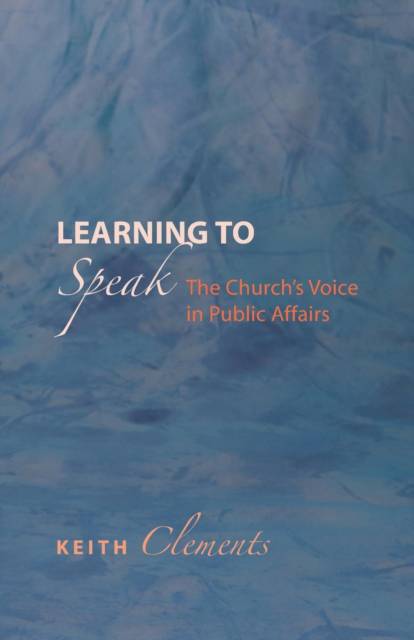
Churches and ecumenical bodies are often criticized for saying too much, or too little, on social and political affairs. But how can churches speak out on such affairs? How can churches participate effectively? Keith Clements questions the present preoccupation with making 'statements', which not only presupposes that a church has ready-made 'answers', but is also symptomatic of modern Western society's obsession with publicity and instant 'solutions' to what are often complex problems. Clements examines such historically famous statements as the German Barmen Declaration of 1934 and the South African Kairos Document of 1985, before exploring the biblical and theological roots of the key motifs of prophesy and discipleship. He suggests that Western churches must continue to listen and learn, not least from the way churches in regions such as South Africa, the Middle East, and Eastern Europe are relearning their roles. Clements concludes that Western churches must be prepared to talk modestly. They must be prepared to be both more disciplined and more imaginative. They must also be prepared to be more theological. Drawing on a wide range of sources, Catholic and Protestant, contemporary and historical, Clements points the way forward for a Christian community learning to speak in the world and to the world. Keith Clements: born 1943. Graduate of Cambridge and Oxford Universities with doctorate from Bristol University, England. Served as pastor of Baptist congregations in UK 1967-1977; 1977-1990 Tutor at Bristol Baptist College and part-time lecturer in Theology and Religious Studies, Bristol University; 1990-1997 Secretary for International Affairs, Council of Churches for Britain and Ireland; 1997-2005 General Secretary, Conference of European Churches, Geneva. Now in active retirement in the west of England and occupied with writing and lecturing as far afield as the USA, South Africa, and Australia.
Spécifications
Parties prenantes
- Auteur(s) :
- Editeur:
Contenu
- Nombre de pages :
- 254
- Langue:
- Anglais
Caractéristiques
- EAN:
- 9781610973694
- Date de parution :
- 13-06-11
- Format:
- Livre broché
- Format numérique:
- Trade paperback (VS)
- Dimensions :
- 140 mm x 213 mm
- Poids :
- 317 g


Seulement chez Librairie Club
+ 91 points sur votre carte client de Librairie Club

Les avis
Nous publions uniquement les avis qui respectent les conditions requises. Consultez nos conditions pour les avis.