


- Retrait en 2 heures
- Assortiment impressionnant
- Paiement sécurisé
- Toujours un magasin près de chez vous
- Retrait en 2 heures
- Assortiment impressionnant
- Paiement sécurisé
- Toujours un magasin près de chez vous




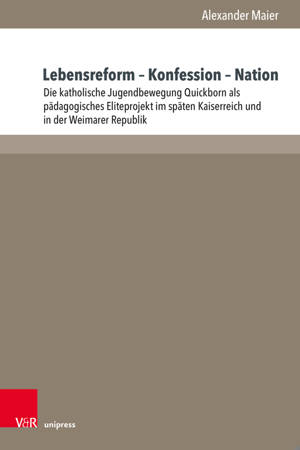
Lebensreform - Konfession - Nation
Die katholische Jugendbewegung Quickborn als pädagogisches Eliteprojekt im späten Kaiserreich und in der Weimarer Republik
Alexander Maier
64,45 €
+ 128 points
Description
Entgegen der dominanten historischen Forschungsmeinung, dass die Jugendbewegung vor allem ein Phänomen der (kultur-)protestantisch geprägten Mehrheitskultur Deutschlands war, zeigt Alexander Maier, dass auch der 'katholische Wandervogel' Quickborn Teil der deutschen Jugendbewegung war. Die Quickbornbewegung, die Mädchen und Jungen umfasste, entwickelte während des Ersten Weltkriegs und der Weimarer Republik ein 'modernes' pädagogisches Selbsterziehungskonzept, ein damit verbundenes sozio-kulturelles Reformprogramm, dass vor allem vom Abstinenzmotiv geleitet wurde, sowie eine starke nationale Dynamik. Zu den Mentoren des Quickborn zählt auch der bekannte Theologe Romano Guardini. Der bildungshistorisch angelegte Band stellt die 'Pädagogik' des Quickborn dar, ordnet sie in die zeitgenössischen Strömungen ein, unterzieht sie einer kritischen Analyse und stellt bisherige Einschätzungen des Quickborn als frühes Laboratorium eines nachkonziliaren, anthropologisch orientierten Katholizismus in Frage.
In contrast to the prevailing view in historical research that the youth movement was primarily a phenomenon of the German majority culture, that was mainly affected by Protestantism, Alexander Maier demonstrates that the 'Catholic Wandervogel' Quickborn was also part of the German youth movement. During the First World War and the Weimar Republic, this movement for girls and boys developed a 'modern' concept of self-education, a socio-cultural reform programme and a strong national dynamic. One of Quickborn's mentors was the renowned theologian Romano Guardini. This volume presents the 'pedagogy' of Quickborn from the perspective of Educational History, contextualise it within contemporary trends, provides a critical analysis of it and calls into question previous assessments of Quickborn as an early laboratory of a post-conciliar, anthropologically oriented Catholicism.
Spécifications
Parties prenantes
- Auteur(s) :
- Editeur:
Contenu
- Langue:
- Allemand
- Collection :
- Tome:
- n° 22
Caractéristiques
- EAN:
- 9783847119548
- Date de parution :
- 10-08-26
- Format:
- Livre broché


Seulement chez Librairie Club
+ 128 points sur votre carte client de Librairie Club
Cadeau


Les avis
Nous publions uniquement les avis qui respectent les conditions requises. Consultez nos conditions pour les avis.