


- Retrait en 2 heures
- Assortiment impressionnant
- Paiement sécurisé
- Toujours un magasin près de chez vous
- Retrait en 2 heures
- Assortiment impressionnant
- Paiement sécurisé
- Toujours un magasin près de chez vous



5,49 €
+ 5 points
Description
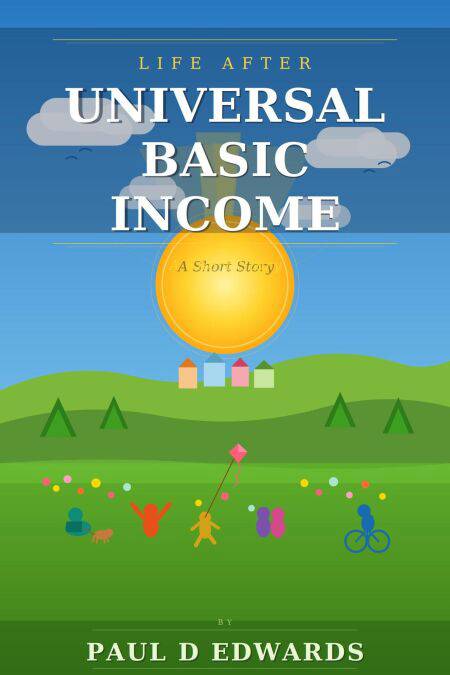
The Thousand-Dollar Life A Story Description Setting: A mid-sized American city, spanning the years 2027–2163.The Premise: When the United States passes the Universal Basic Income Act of 2027, every citizen begins receiving $1,000 per month from birth — deposited into a trust managed by a parent or guardian until adulthood. The story follows four children born the same year the law takes effect, in the same neighborhood, to vastly different families. We watch them grow, stumble, love, work, and age — each shaped by the $1,000 in entirely different ways.
Universal Basic Income is a policy proposal in which a government regularly provides every citizen (or adult resident) with a fixed sum of money, unconditionally — regardless of employment status, income level, or social standing.
Core Characteristics
Universal — given to everyone, not just the poor or unemployed Unconditional — no work requirements, means testing, or behavioral conditions attached Regular — paid on a recurring basis (e.g., monthly) Cash-based — recipients decide how to spend itThe Central Idea
The goal is to guarantee a financial floor beneath every person, ensuring no one falls below a basic standard of living. Unlike traditional welfare programs, UBI doesn't require recipients to prove need or comply with specific conditions.
Common Arguments For UBI
Reduces poverty and economic insecurity Simplifies and replaces a complex web of existing welfare programs Supports people through job displacement caused by automation Gives workers more bargaining power and freedom to leave exploitative jobs Enables people to pursue education, caregiving, or entrepreneurshipCommon Arguments Against UBI
Potentially very expensive to fund at a meaningful scale May reduce the incentive to work Could fuel inflation if not carefully managed A universal payment may be inefficient compared to targeted assistance for those most in need Might be used to justify cutting existing social programsNotable Examples & Pilots
Finland ran a two-year pilot (2017–2018) giving €560/month to unemployed citizens Stockton, California piloted a program giving $500/month to residents Alaska's Permanent Fund Dividend has paid residents an annual share of oil revenues since 1982 — often cited as the closest real-world modelUBI remains a hotly debated concept across the political spectrum, drawing interest from both the left (as a poverty-reduction tool) and the right (as a streamlined alternative to bureaucratic welfare systems).
Spécifications
Parties prenantes
- Auteur(s) :
- Editeur:
Contenu
- Langue:
- Anglais
Caractéristiques
- EAN:
- 9798233481154
- Date de parution :
- 31-03-26
- Format:
- Ebook
- Protection digitale:
- /
- Format numérique:
- ePub


Seulement chez Librairie Club
+ 5 points sur votre carte client de Librairie Club
Cadeau


Les avis
Nous publions uniquement les avis qui respectent les conditions requises. Consultez nos conditions pour les avis.