


- Retrait en 2 heures
- Assortiment impressionnant
- Paiement sécurisé
- Toujours un magasin près de chez vous
- Retrait en 2 heures
- Assortiment impressionnant
- Paiement sécurisé
- Toujours un magasin près de chez vous



271,45 €
+ 542 points
Description
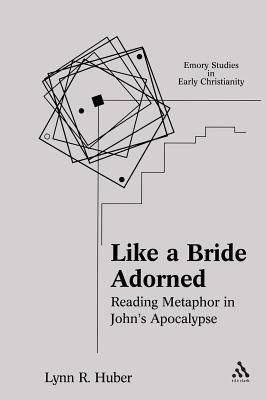
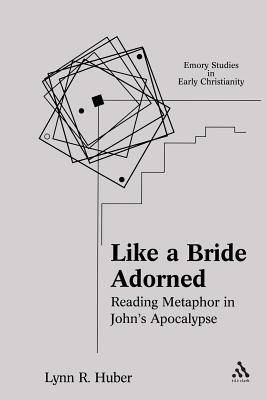
The phrase "like a bride adorned" is one of the ways Revelation describes the new Jerusalem which descends from heaven. This phrase can also be read as describing one of the ways interpreters historically have understood the relationship between Revelation and its metaphorical language. In contrast to views that suggest Revelation's metaphorical language is simple adornment, Huber argues that Revelation's persuasive power resides within the text's metaphorical nature and she articulates a method for exploring how Revelation employs metaphor to shape an audience's thought.
In order to gain a sense of how metaphorical language works in Revelation's highly metaphorical text, "Like a Bride Adorned: " Reading Metaphor in John's Apocalypse engages one set of conceptual metaphors in relation to Revelation's literary and social-historical milieu. Specifically, Huber explores the conceptual metaphors undergirding Revelation's nuptial or bridal imagery. Positioned at the culmination of the text's, nuptial imagery serves as one the text's final and arguably one of its most important characterizations of the Christian community. Examining the function of Revelation's nuptial imagery involves investigating how the text redeploys conventional metaphorical constructions used in the writings of the Hebrew prophets and how its imagery engages Greco-Roman depictions of women, weddings, and brides. Discourse about marriage and family was such an important part of Revelation's historical context, especially as it was shaped by the Roman Empire, that any discussion of the text's nuptial imagery must examine how it reflects and responds to this discourse. By addressing these questions, we see that Revelation's nuptial imagery serves to further the text's goal of shaping Christian identity in opposition to the social demands of the Roman Empire. Moreover, exploration of the conceptual metaphors undergirding Revelation's "bride adorned" reveals how John seeks to shape Christian identity as a transitional identity. Through metaphor, Revelation encourages its audience to envision the Christian community as a bride who constructs "her" own identity as she transitions into a new role in relation to God and the Lamb. Through the process of exploring Revelation's nuptial imagery with insights gained from conceptual metaphor theory, we uncover the ways that John employs metaphorical language to persuade his audience's thought about themselves and about others. Consequently, this work contributes both to our understanding of the text's nuptial imagery and to our knowledge of how Revelation employs metaphor as tool for persuasion.Spécifications
Parties prenantes
- Auteur(s) :
- Editeur:
Contenu
- Nombre de pages :
- 232
- Langue:
- Anglais
- Collection :
Caractéristiques
- EAN:
- 9780567026743
- Date de parution :
- 10-06-07
- Format:
- Livre broché
- Format numérique:
- Trade paperback (VS)
- Dimensions :
- 160 mm x 227 mm
- Poids :
- 390 g


Seulement chez Librairie Club
+ 542 points sur votre carte client de Librairie Club
Cadeau


Les avis
Nous publions uniquement les avis qui respectent les conditions requises. Consultez nos conditions pour les avis.