


- Retrait en 2 heures
- Assortiment impressionnant
- Paiement sécurisé
- Toujours un magasin près de chez vous
- Retrait en 2 heures
- Assortiment impressionnant
- Paiement sécurisé
- Toujours un magasin près de chez vous



83,95 €
+ 167 points
Description
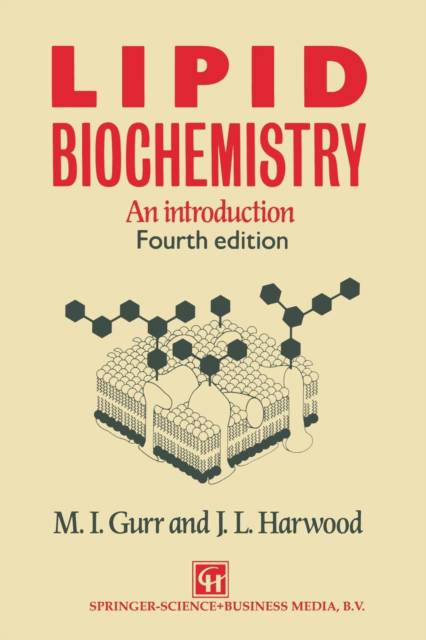
Lipids can usually be extracted easily from tissues by making use of their hydrophobic characteristics. However, such extractions yield a complex mixture of different lipid classes which have to be purified further for quantitative analysis. Moreover, the crude lipid extract will be contami- nated by other hydrophobic molecules, e.g. by intrinsic membrane proteins. Of the various types of separation processes, thin layer and column chromatography are most useful for intact lipids. High performance liquid chromatography (HPLC) is also rapidly becoming more popular, especially for the fractionation of molecular species of a given lipid class. The most powerful tool for quantitation of the majority of lipids is gas- liquid chromatography (GLC). The method is very sensitive and, if adapted with capillary columns, can provide information with regard to such subtle features as the position or configuration of substitutions along acyl chains. By coupling GLC or HPLC to a radioactivity detector, then the techniques are also very useful for metabolic measurements. Although research laboratories use generally sophisticated analytical methods such as GLC to analyse and quantify lipid samples, chemical derivatie: ations are often used in hospitals. For these methods, the lipid samples are derivatized to yield a product which can be measured simply and accurately-usually by colour. Thus, total triacylglycerol, cholesterol or phospholipid-phosphorus can be quantitated conveniently without bothering with the extra information of molecular species, etc. which might be determined by more thorough analyses. REFERENCES Christie, w.w. (1982) Lipid Analysis, 2nd edn, Pergamon Press, Oxford.
Spécifications
Parties prenantes
- Auteur(s) :
- Editeur:
Contenu
- Nombre de pages :
- 406
- Langue:
- Anglais
- Collection :
Caractéristiques
- EAN:
- 9780412266201
- Date de parution :
- 28-02-91
- Format:
- Livre broché
- Format numérique:
- Trade paperback (VS)
- Dimensions :
- 156 mm x 234 mm
- Poids :
- 580 g


Seulement chez Librairie Club
+ 167 points sur votre carte client de Librairie Club
Cadeau


Les avis
Nous publions uniquement les avis qui respectent les conditions requises. Consultez nos conditions pour les avis.