


- Retrait en 2 heures
- Assortiment impressionnant
- Paiement sécurisé
- Toujours un magasin près de chez vous
- Retrait gratuit dans votre magasin Club
- 7.000.0000 titres dans notre catalogue
- Payer en toute sécurité
- Toujours un magasin près de chez vous



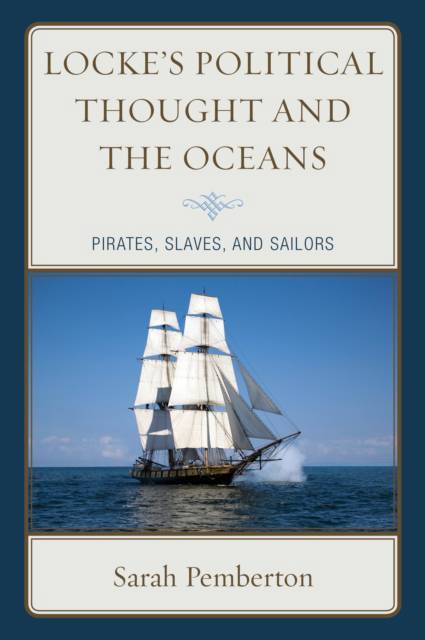
Locke's Political Thought and the Oceans
Pirates, Slaves, and Sailors
Sarah Pemberton
Livre broché | Anglais
76,45 €
+ 152 points
Description
This book outlines and analyzes John Locke's political thought about the oceans with a focus on law and freedom at sea. The book examines the Two Treatises of Government, in which Locke argues that the seas are collectively owned by all humans and are governed by universal natural laws that prohibit piracy. Locke's Two Treatises provides a systematic political theory of the seas that contributes to theories of international law and maritime law, but his text does not answer the practical question of how to enforce law effectively at sea. The book also considers how Locke translated his theoretical ideas into practice when he was involved in policymaking as a member of England's Board of Trade during the 1690s. On the Board, Locke waged a war against pirates by proposing an anti-piracy treaty between Europe's major maritime states, by successfully advocating a new English piracy law, and by supporting the deployment of the English Navy against pirates. Locke's war against pirates was consistent with the natural law theory in the Two Treatises, and helped to build English empire on land and at sea. There is also consistency between Locke's theoretical views about slavery and his work on the Board of Trade. As a Board member, Locke advocated forced migration and forced labor for English convicts, which is consistent with the theory of penal slavery in the Two Treatises and suggests that his theory was intended to justify the enslavement of English convicts. However, there are tensions between Locke's arguments in the Two Treatises and the policies of forced naval service that he supported on the Board. Locke's theories of law and freedom at sea shaped his vision of English national identity, and influenced the English government's policies about slavery and piracy.
Spécifications
Parties prenantes
- Auteur(s) :
- Editeur:
Contenu
- Nombre de pages :
- 178
- Langue:
- Anglais
Caractéristiques
- EAN:
- 9781498538237
- Date de parution :
- 11-02-20
- Format:
- Livre broché
- Format numérique:
- Trade paperback (VS)
- Dimensions :
- 152 mm x 229 mm
- Poids :
- 267 g


Seulement chez Librairie Club
+ 152 points sur votre carte client de Librairie Club
Cadeau

Cadeau


Les avis
Nous publions uniquement les avis qui respectent les conditions requises. Consultez nos conditions pour les avis.