


- Retrait en 2 heures
- Assortiment impressionnant
- Paiement sécurisé
- Toujours un magasin près de chez vous
- Retrait en 2 heures
- Assortiment impressionnant
- Paiement sécurisé
- Toujours un magasin près de chez vous


12,71 €
+ 12 points
Description
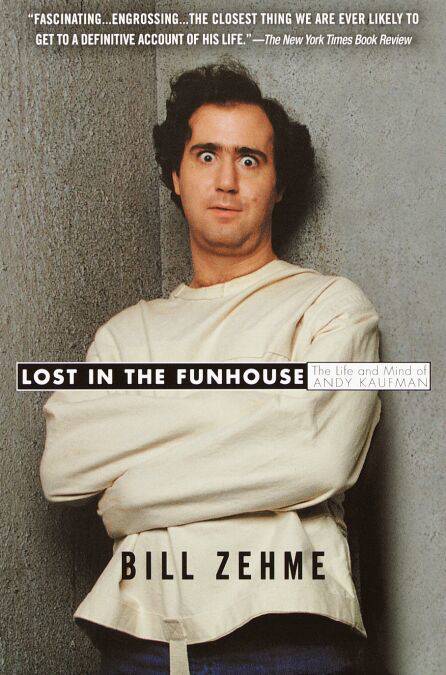
From renowned journalist Bill Zehme, author of the New York Times bestselling The Way You Wear Your Hat: Frank Sinatra and the Lost Art of Livin', comes the first full-fledged biography and the only complete story of the late comic genius Andy Kaufman. Based on six years of research, Andy's own unpublished, never-before-seen writings, and hundreds of interviews with family members, friends, and key players in Andy's endless charades, many of whom have become icons in their own right, Lost in the Funhouse takes us through the maze of Kaufman's mind and lets us sit deep behind his mad, dazzling blue eyes to see, firsthand, the fanciful landscape that was his life. Controversial, chaotic, splendidly surreal, and tragically brief--what a life it was.
Andy Kaufman was often a mystery even to his closest friends. Remote, aloof, impossible to know, his internal world was a kaleidoscope of characters fighting for time on the outside. He was as much Andy Kaufman as he was Foreign Man (dank you veddy much), who became the lovably bashful Latka on the hit TV series Taxi. He was as much Elvis Presley as he was the repugnant Tony Clifton, a lounge singer from Vegas who hated any audience that came to see him and who seemed to hate Andy Kaufman even more. He was a contradiction, a paradox on every level, an artist in every sense of the word.
During the comic boom of the seventies, when the world had begun to discover the prodigious talents of Steve Martin, Richard Pryor, John Belushi, Bill Murray, and so many others, Andy was simply doing what he had always done in his boyhood reveries. On the debut of Saturday Night Live, he stood nervously next to a phonograph that scratchily played the theme from Mighty Mouse. He fussed and fidgeted, waiting for his moment. When it came, he raised his hand and moved his mouth to the words "Here I come to save the day!" In that beautiful deliverance of pantomime before the millions of people for whom he had always dreamed about performing, Andy triumphed. He changed the face of comedy forever by lurching across boundaries that no one knew existed. He was the boy who made life his playground and never stopped playing, even when the games proved too dangerous for others. And in the end he would play alone, just as he had when it was all only beginning.
In Lost in the Funhouse, Bill Zehme sorts through a life of disinformation put forth by a master of deception to uncover the motivation behind the manipulation. Magically entertaining, it is a singular biography matched only by its singular subject.
Andy Kaufman was often a mystery even to his closest friends. Remote, aloof, impossible to know, his internal world was a kaleidoscope of characters fighting for time on the outside. He was as much Andy Kaufman as he was Foreign Man (dank you veddy much), who became the lovably bashful Latka on the hit TV series Taxi. He was as much Elvis Presley as he was the repugnant Tony Clifton, a lounge singer from Vegas who hated any audience that came to see him and who seemed to hate Andy Kaufman even more. He was a contradiction, a paradox on every level, an artist in every sense of the word.
During the comic boom of the seventies, when the world had begun to discover the prodigious talents of Steve Martin, Richard Pryor, John Belushi, Bill Murray, and so many others, Andy was simply doing what he had always done in his boyhood reveries. On the debut of Saturday Night Live, he stood nervously next to a phonograph that scratchily played the theme from Mighty Mouse. He fussed and fidgeted, waiting for his moment. When it came, he raised his hand and moved his mouth to the words "Here I come to save the day!" In that beautiful deliverance of pantomime before the millions of people for whom he had always dreamed about performing, Andy triumphed. He changed the face of comedy forever by lurching across boundaries that no one knew existed. He was the boy who made life his playground and never stopped playing, even when the games proved too dangerous for others. And in the end he would play alone, just as he had when it was all only beginning.
In Lost in the Funhouse, Bill Zehme sorts through a life of disinformation put forth by a master of deception to uncover the motivation behind the manipulation. Magically entertaining, it is a singular biography matched only by its singular subject.
Spécifications
Parties prenantes
- Auteur(s) :
- Editeur:
Contenu
- Nombre de pages :
- 384
- Langue:
- Anglais
Caractéristiques
- EAN:
- 9780307428462
- Date de parution :
- 03-11-2009
- Format:
- Ebook
- Protection digitale:
- Adobe DRM
- Format numérique:
- ePub


Seulement chez Librairie Club
+ 12 points sur votre carte client de Librairie Club
Cadeau

Cadeau


Les avis
Nous publions uniquement les avis qui respectent les conditions requises. Consultez nos conditions pour les avis.