


- Retrait en 2 heures
- Assortiment impressionnant
- Paiement sécurisé
- Toujours un magasin près de chez vous
- Retrait en 2 heures
- Assortiment impressionnant
- Paiement sécurisé
- Toujours un magasin près de chez vous



16,76 €
+ 16 points
Format
Description
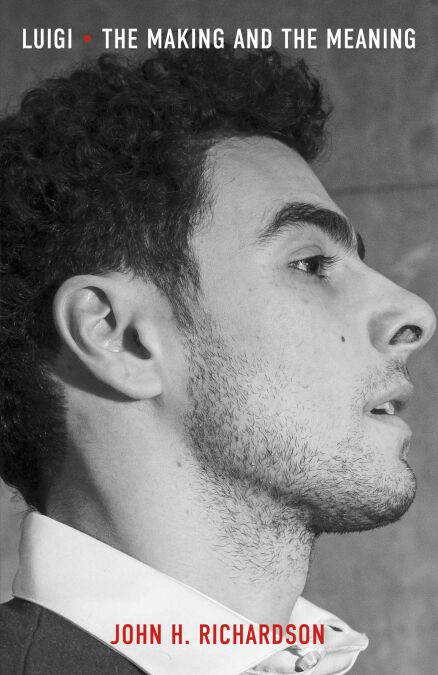
WHO IS LUIGI MANGIONE, WHERE DID HE COME FROM AND WHY DID THE CRIME HE IS ACCUSED OF MAKE HIM A HERO TO SO MANY?
When Luigi Mangione was arrested for allegedly killing Brian Thompson, the CEO of UnitedHealthcare, the prizewinning journalist John H. Richardson thought he recognized the type. Ten years earlier, Richardson had begun a correspondence with Ted Kaczynski, the murderous genius known as the Unabomber, as part of his search to understand the surprising number of young Americans who have discovered Kaczynski and found his manifesto prophetic. Luigi was one of them.
In Luigi: The Making and the Meaning, Richardson shows that Luigi, the son of a wealthy Baltimore family, with an Ivy League degree, Renaissance looks and an irrepressible curiosity, is part of a growing group of modern Americans who seem to be buzzing with dread: They see humans losing their humanity not just to capitalism’s rough justice but also to algorithms, social media and artificial intelligence, and to a world order that refuses to acknowledge the urgency of climate change. They also feel trapped by the scolds of “woke” ideology and alarmed by the decline in birth rates, lashed to the wheel of a system in which change has become impossible and unstoppable at the same time.
They don’t fit neatly into left or right—and, at the extremes, even if they see the problems and solutions in radically different ways, they are united in their hunger to fix the world. Richardson doesn’t pretend to be able to tell you exactly what may have motivated Luigi. But he tracked Luigi down—not just to understand Luigi himself but also to explore his connection to the other young searchers Richardson has come to know as the “Children of Ted.” In this way, Richardson shows why the world was primed for the Luigi Mangione moment and why the accused shooter has been embraced as an avenger with an affection not seen since Jesse James or Robin Hood.
When Luigi Mangione was arrested for allegedly killing Brian Thompson, the CEO of UnitedHealthcare, the prizewinning journalist John H. Richardson thought he recognized the type. Ten years earlier, Richardson had begun a correspondence with Ted Kaczynski, the murderous genius known as the Unabomber, as part of his search to understand the surprising number of young Americans who have discovered Kaczynski and found his manifesto prophetic. Luigi was one of them.
In Luigi: The Making and the Meaning, Richardson shows that Luigi, the son of a wealthy Baltimore family, with an Ivy League degree, Renaissance looks and an irrepressible curiosity, is part of a growing group of modern Americans who seem to be buzzing with dread: They see humans losing their humanity not just to capitalism’s rough justice but also to algorithms, social media and artificial intelligence, and to a world order that refuses to acknowledge the urgency of climate change. They also feel trapped by the scolds of “woke” ideology and alarmed by the decline in birth rates, lashed to the wheel of a system in which change has become impossible and unstoppable at the same time.
They don’t fit neatly into left or right—and, at the extremes, even if they see the problems and solutions in radically different ways, they are united in their hunger to fix the world. Richardson doesn’t pretend to be able to tell you exactly what may have motivated Luigi. But he tracked Luigi down—not just to understand Luigi himself but also to explore his connection to the other young searchers Richardson has come to know as the “Children of Ted.” In this way, Richardson shows why the world was primed for the Luigi Mangione moment and why the accused shooter has been embraced as an avenger with an affection not seen since Jesse James or Robin Hood.
Spécifications
Parties prenantes
- Auteur(s) :
- Editeur:
Contenu
- Nombre de pages :
- 272
- Langue:
- Anglais
Caractéristiques
- EAN:
- 9781668209363
- Date de parution :
- 03-11-25
- Format:
- Ebook
- Protection digitale:
- Adobe DRM
- Format numérique:
- ePub



Seulement chez Librairie Club
+ 16 points sur votre carte client de Librairie Club
Cadeau


Les avis
Nous publions uniquement les avis qui respectent les conditions requises. Consultez nos conditions pour les avis.