


- Retrait en 2 heures
- Assortiment impressionnant
- Paiement sécurisé
- Toujours un magasin près de chez vous
- Retrait en 2 heures
- Assortiment impressionnant
- Paiement sécurisé
- Toujours un magasin près de chez vous



154,45 €
+ 308 points
Description
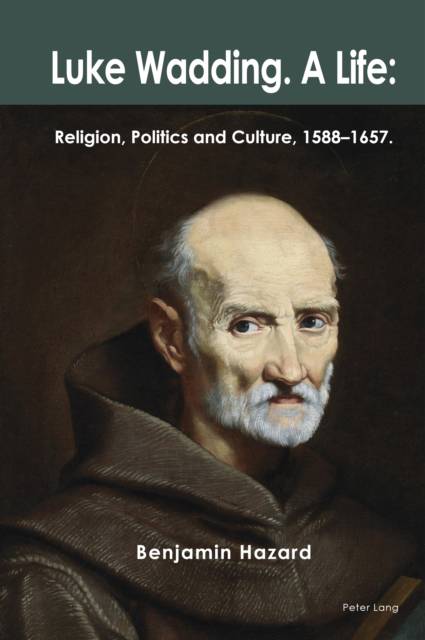
Luke Wadding was a pivotal figure in the seventeenth century. This book begins by exploring his early years in his birthplace of Waterford and the circumstances of his leaving Ireland for the European continent. As a friar Wadding enjoyed access to the most prominent centres of learning in the Iberian Peninsula. We learn about daily life as it was lived at Salamanca where Wadding became a professor of theology. We then move to Italy and the reasons for Wadding's arrival at the papal court, his scholarly travels and early publications as Franciscan chronicler, placing a specific focus on the illustration of his own books. Here and elsewhere we observe Wadding's capacity for establishing a wide circle of friends. In Rome he successfully created a nexus of knowledge and made his home at St. Isidore's College. Wadding related to the Eternal City through cultural engagement. This section of the book therefore deals with the art and architecture of Wadding's world, the cultural production of books, and the inspiration he gave for a new college in Prague. Throughout this work digs deep into Wadding's writings, his papers and recent scholarship to provide a unique and accurate account that reveals as much as possible about him. Wadding reached a position of considerable influence while achieving international recognition and maintaining connections to his family in Ireland. As such Wadding is essential to understanding the labyrinth of the papal court and the tangled politics of Ireland in the 1640s. The book charts developments in his career while maintaining chronological order. The next section reveals the damage done by a decade of war in Ireland, the limits of support for Wadding and that sense of insecurity that spread among the Irish abroad. The book closes by examining how Wadding survived to complete a publication campaign that he started a quarter of a century earlier while continuing to cultivate close contacts that protected his long-term interests after his death in 1657.
2025 marks the 400-year celebration of St Isidore's Franciscan College (Collegio S. Isidoro), founded by Luke Wadding OFM for Irish friars to study for the priesthood and as a centre of theological scholarship.
2025 marks the 400-year celebration of St Isidore's Franciscan College (Collegio S. Isidoro), founded by Luke Wadding OFM for Irish friars to study for the priesthood and as a centre of theological scholarship.
Spécifications
Parties prenantes
- Auteur(s) :
- Editeur:
Contenu
- Nombre de pages :
- 450
- Langue:
- Anglais
Caractéristiques
- EAN:
- 9781803747330
- Date de parution :
- 18-08-25
- Format:
- Livre relié
- Format numérique:
- Genaaid
- Dimensions :
- 152 mm x 229 mm
- Poids :
- 766 g


Seulement chez Librairie Club
+ 308 points sur votre carte client de Librairie Club
Cadeau


Les avis
Nous publions uniquement les avis qui respectent les conditions requises. Consultez nos conditions pour les avis.