


En raison d'une grève chez bpost, des retards de livraison peuvent survenir. Besoin de quelque chose en urgence ? Optez pour un retrait en magasin ou rendez-vous dans une Librairie Club à proximité.
- Retrait en 2 heures
- Assortiment impressionnant
- Paiement sécurisé
- Toujours un magasin près de chez vous
En raison d'une grève chez bpost, des retards de livraison peuvent survenir. Besoin de quelque chose en urgence ? Optez pour un retrait en magasin ou rendez-vous dans une Librairie Club à proximité.
- Retrait en 2 heures
- Assortiment impressionnant
- Paiement sécurisé
- Toujours un magasin près de chez vous



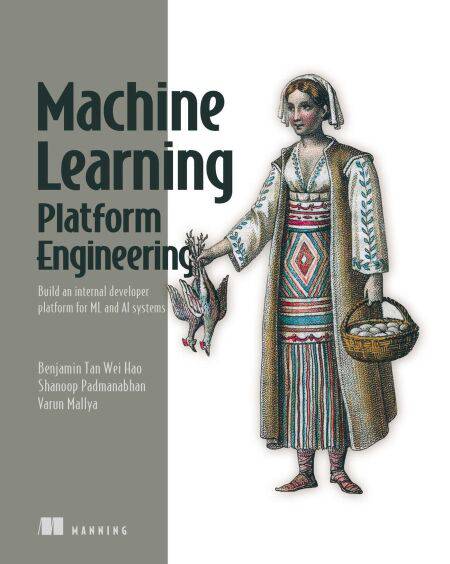
Machine Learning Platform Engineering EBOOK
Build an internal developer platform for ML and AI systems
Benjamin Tan Wei Hao, Shanoop Padmanabhan, Varun Mallya
Ebook | Anglais
49,20 €
+ 49 points
Format
Description
Delivering a successful machine learning project is hard. This book makes it easier. In it, you’ll design a reliable ML system from the ground up, incorporating MLOps and DevOps along with a stack of proven infrastructure tools including Kubeflow, MLFlow, BentoML, Evidently, and Feast.
A properly designed machine learning system streamlines data workflows, improves collaboration between data and operations teams, and provides much-needed structure for both training and deployment. In this book you’ll learn how to design and implement a machine learning system from the ground up. You’ll appreciate this instantly-useful introduction to achieving the full benefits of automated ML infrastructure.
In Machine Learning Platform Engineering you’ll learn how to:
• Set up an MLOps platform
• Deploy machine learning models to production
• Build end-to-end data pipelines
• Effective monitoring and explainability
About the technology
AI and ML systems have a lot of moving parts, from language libraries and application frameworks, to workflow and deployment infrastructure, to LLMs and other advanced models. A well-designed internal development platform (IDP) gives developers a defined set of tools and guidelines that accelerate the dev process, improving consistency, security, and developer experience.
About the book
Machine Learning Platform Engineering shows you how to build an effective IDP for ML and AI applications. Each chapter illuminates a vital part of the ML workflow, including setting up orchestration pipelines, selecting models, allocating resources for training, inference, and serving, and more. As you go, you’ll create a versatile modern platform using open source tools like Kubeflow, MLFlow, BentoML, Evidently, Feast, and LangChain.
What's inside
• Set up an end-to-end MLOps/LLMOps platform
• Deploy ML and AI models to production
• Effective monitoring, evaluation, and explainability
About the reader
For data scientists or software engineers. Examples in Python.
About the author
Benjamin Tan Wei Hao leads a team of ML engineers and data scientists at DKatalis. Shanoop Padmanabhan is a software engineering manager at Continental Automotive. Varun Mallya is a senior ML engineer at DKatalis.
Table of Contents
Part 1
1 Getting started with MLOps and ML engineering
2 What is MLOps?
3 Building applications on Kubernetes
Part 2
4 Designing reliable ML systems
5 Orchestrating ML pipelines
6 Productionizing ML models
Part 3
7 Data analysis and preparation
8 Model training and validation: Part 1
9 Model training and validation: Part 2
10 Model inference and serving
11 Monitoring and explainability
Part 4
12 Designing LLM-powered systems
13 Production LLM system design
A Installation and setup
B Basics of YAML
A properly designed machine learning system streamlines data workflows, improves collaboration between data and operations teams, and provides much-needed structure for both training and deployment. In this book you’ll learn how to design and implement a machine learning system from the ground up. You’ll appreciate this instantly-useful introduction to achieving the full benefits of automated ML infrastructure.
In Machine Learning Platform Engineering you’ll learn how to:
• Set up an MLOps platform
• Deploy machine learning models to production
• Build end-to-end data pipelines
• Effective monitoring and explainability
About the technology
AI and ML systems have a lot of moving parts, from language libraries and application frameworks, to workflow and deployment infrastructure, to LLMs and other advanced models. A well-designed internal development platform (IDP) gives developers a defined set of tools and guidelines that accelerate the dev process, improving consistency, security, and developer experience.
About the book
Machine Learning Platform Engineering shows you how to build an effective IDP for ML and AI applications. Each chapter illuminates a vital part of the ML workflow, including setting up orchestration pipelines, selecting models, allocating resources for training, inference, and serving, and more. As you go, you’ll create a versatile modern platform using open source tools like Kubeflow, MLFlow, BentoML, Evidently, Feast, and LangChain.
What's inside
• Set up an end-to-end MLOps/LLMOps platform
• Deploy ML and AI models to production
• Effective monitoring, evaluation, and explainability
About the reader
For data scientists or software engineers. Examples in Python.
About the author
Benjamin Tan Wei Hao leads a team of ML engineers and data scientists at DKatalis. Shanoop Padmanabhan is a software engineering manager at Continental Automotive. Varun Mallya is a senior ML engineer at DKatalis.
Table of Contents
Part 1
1 Getting started with MLOps and ML engineering
2 What is MLOps?
3 Building applications on Kubernetes
Part 2
4 Designing reliable ML systems
5 Orchestrating ML pipelines
6 Productionizing ML models
Part 3
7 Data analysis and preparation
8 Model training and validation: Part 1
9 Model training and validation: Part 2
10 Model inference and serving
11 Monitoring and explainability
Part 4
12 Designing LLM-powered systems
13 Production LLM system design
A Installation and setup
B Basics of YAML
Spécifications
Parties prenantes
- Auteur(s) :
- Editeur:
Contenu
- Nombre de pages :
- 504
- Langue:
- Anglais
Caractéristiques
- EAN:
- 9781638357995
- Date de parution :
- 16-03-26
- Format:
- Ebook
- Protection digitale:
- Adobe DRM
- Format numérique:
- ePub


Seulement chez Librairie Club
+ 49 points sur votre carte client de Librairie Club
Cadeau


Les avis
Nous publions uniquement les avis qui respectent les conditions requises. Consultez nos conditions pour les avis.