


- Retrait en 2 heures
- Assortiment impressionnant
- Paiement sécurisé
- Toujours un magasin près de chez vous
- Retrait en 2 heures
- Assortiment impressionnant
- Paiement sécurisé
- Toujours un magasin près de chez vous



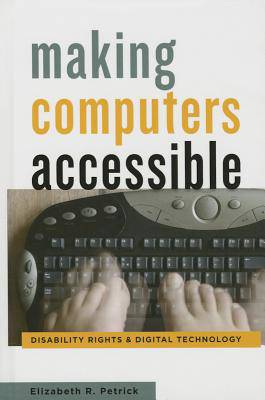
Making Computers Accessible
Disability Rights and Digital Technology
Elizabeth R Petrick
Livre relié | Anglais
70,95 €
+ 141 points
Description
The revolution in accessible computer technology was fueled by disability activism, the interactive nature of personal computers, and changing public policy.
In 1974, not long after developing the first universal optical character recognition technology, Raymond Kurzweil struck up a conversation with a blind man on a flight. Kurzweil explained that he was searching for a use for his new software. The blind man expressed interest: One of the frustrating obstacles that blind people grappled with, he said, was that no computer program could translate text into speech. Inspired by this chance meeting, Kurzweil decided that he must put his new innovation to work to "overcome this principal handicap of blindness." By 1976, he had built a working prototype, which he dubbed the Kurzweil Reading Machine.
This type of innovation demonstrated the possibilities of computers to dramatically improve the lives of people living with disabilities. In Making Computers Accessible, Elizabeth R. Petrick tells the compelling story of how computer engineers and corporations gradually became aware of the need to make computers accessible for all people. Motivated by user feedback and prompted by legislation such as the Americans with Disabilities Act, which offered the promise of equal rights via technological accommodation, companies developed sophisticated computerized devices and software to bridge the accessibility gap.
People with disabilities, Petrick argues, are paradigmatic computer users, demonstrating the personal computer's potential to augment human abilities and provide for new forms of social, professional, and political participation. Bridging the history of technology, science and technology studies, and disability studies, this book traces the psychological, cultural, and economic evolution of a consumer culture aimed at individuals with disabilities, who increasingly rely on personal computers to make their lives richer and more interconnected.
Spécifications
Parties prenantes
- Auteur(s) :
- Editeur:
Contenu
- Nombre de pages :
- 208
- Langue:
- Anglais
Caractéristiques
- EAN:
- 9781421416465
- Date de parution :
- 01-06-15
- Format:
- Livre relié
- Format numérique:
- Genaaid
- Dimensions :
- 150 mm x 229 mm
- Poids :
- 408 g


Seulement chez Librairie Club
+ 141 points sur votre carte client de Librairie Club
Cadeau


Les avis
Nous publions uniquement les avis qui respectent les conditions requises. Consultez nos conditions pour les avis.