


- Retrait en 2 heures
- Assortiment impressionnant
- Paiement sécurisé
- Toujours un magasin près de chez vous
- Retrait en 2 heures
- Assortiment impressionnant
- Paiement sécurisé
- Toujours un magasin près de chez vous



10,40 €
+ 10 points
Description
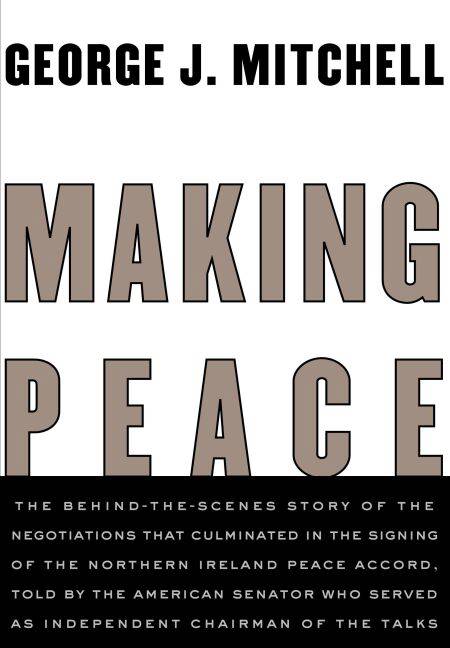
Fifteen minutes before five o'clock on Good Friday, 1998, Senator George Mitchell was informed that his long and difficult quest for an Irish peace accord had succeeded--the Protestants and Catholics of Northern Ireland, and the governments of the Republic of Ireland and the United Kingdom, would sign the agreement. Now Mitchell, who served as independent chairman of the peace talks for the length of the process, tells us the inside story of the grueling road to this momentous accord.
For more than two years, Mitchell, who was Senate majority leader under Presidents Bush and Clinton, labored to bring together parties whose mutual hostility--after decades of violence and mistrust--seemed insurmountable: Sinn Fein, represented by Gerry Adams; the Catholic moderates, led by John Hume; the majority Protestant party, headed by David Trimble; Ian Paisley's hard-line unionists; and, not least, the governments of the Republic of Ireland and the United Kingdom, headed by Bertie Ahern and Tony Blair.
The world watched as the tense and dramatic process unfolded, sometimes teetering on the brink of failure. Here, for the first time, we are given a behind-the-scenes view of the principal players--the personalities who shaped the process--and of the contentious, at times vitriolic, proceedings. We learn how, as the deadline approached, extremist violence and factional intransigence almost drove the talks to collapse. And we witness the intensity of the final negotiating session, the interventions of Ahern and Blair, the late-night phone calls from President Clinton, a last-ditch attempt at disruption by Paisley, and ultimately an agreement that, despite subsequent inflammatory acts aimed at destroying it, has set Northern Ireland's future on track toward a more lasting peace.
For more than two years, Mitchell, who was Senate majority leader under Presidents Bush and Clinton, labored to bring together parties whose mutual hostility--after decades of violence and mistrust--seemed insurmountable: Sinn Fein, represented by Gerry Adams; the Catholic moderates, led by John Hume; the majority Protestant party, headed by David Trimble; Ian Paisley's hard-line unionists; and, not least, the governments of the Republic of Ireland and the United Kingdom, headed by Bertie Ahern and Tony Blair.
The world watched as the tense and dramatic process unfolded, sometimes teetering on the brink of failure. Here, for the first time, we are given a behind-the-scenes view of the principal players--the personalities who shaped the process--and of the contentious, at times vitriolic, proceedings. We learn how, as the deadline approached, extremist violence and factional intransigence almost drove the talks to collapse. And we witness the intensity of the final negotiating session, the interventions of Ahern and Blair, the late-night phone calls from President Clinton, a last-ditch attempt at disruption by Paisley, and ultimately an agreement that, despite subsequent inflammatory acts aimed at destroying it, has set Northern Ireland's future on track toward a more lasting peace.
Spécifications
Parties prenantes
- Auteur(s) :
- Editeur:
Contenu
- Nombre de pages :
- 208
- Langue:
- Anglais
Caractéristiques
- EAN:
- 9780307824486
- Date de parution :
- 07-08-12
- Format:
- Ebook
- Protection digitale:
- Adobe DRM
- Format numérique:
- ePub


Seulement chez Librairie Club
+ 10 points sur votre carte client de Librairie Club
Cadeau


Les avis
Nous publions uniquement les avis qui respectent les conditions requises. Consultez nos conditions pour les avis.