


- Retrait en 2 heures
- Assortiment impressionnant
- Paiement sécurisé
- Toujours un magasin près de chez vous
- Retrait gratuit dans votre magasin Club
- 7.000.0000 titres dans notre catalogue
- Payer en toute sécurité
- Toujours un magasin près de chez vous



Description
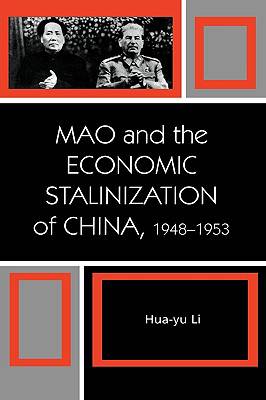
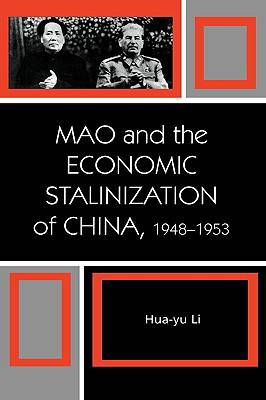
In the first systematic study of its kind, Hua-yu Li tackles one of the most important unresolved mysteries of the early history of the People's Republic of China_the economic policy shift of 1953. As a result of this policy shift, the moderate economic policies of 'New Democracy' were abruptly terminated_much sooner than specified by the official party line_and replaced with a radical Stalinist economic program called the 'general line for socialist transition.' Utilizing the rich archival materials released in China since the mid-1980s and Russian archival information released since the early 1990s, Li presents a compelling explanation for the policy shift. Placing the analysis within the larger context of the world communist movement, communist ideology, and Mao's complicated relationship with Stalin, this book makes it clear that the policy shift was initiated by Mao and that he did so for two reasons. First, he was committed to a history text compiled under Stalin's guidance that purported to describe the Soviet experience of building socialism in the 1920s and 1930s. Mao relied heavily on this text as a road map for China to follow in building socialism in the early 1950s. Second, Mao was driven by feelings of personal rivalry with Stalin and of national rivalry with the Soviet Union: he wanted China to achieve socialism faster than the Soviet Union had. The precise timing of the change, Li argues, resulted from Mao's belief that China was economically ready to build socialism and from his decision to interpret an ambiguous statement made by Stalin in October 1952 as a clear endorsement of a policy shift. Li asserts that Mao was a committed Stalinist, that he dominated domestic policy decision-making, and that he skillfully maneuvered his way through his negotiations with Stalin in advancing his own agenda. Situating its analysis within the larger context of the world communist movement, this carefully researched book will have a profound impact on the fields of communist studies and Sino-Soviet relations and in studies of Mao, Stalin, and their relationship.
Spécifications
Parties prenantes
- Auteur(s) :
- Editeur:
Contenu
- Nombre de pages :
- 266
- Langue:
- Anglais
- Collection :
Caractéristiques
- EAN:
- 9780742540538
- Date de parution :
- 17-02-06
- Format:
- Livre relié
- Format numérique:
- Ongenaaid / garenloos gebonden
- Dimensions :
- 156 mm x 237 mm
- Poids :
- 571 g


Seulement chez Librairie Club
+ 508 points sur votre carte client de Librairie Club
Cadeau

Cadeau


Les avis
Nous publions uniquement les avis qui respectent les conditions requises. Consultez nos conditions pour les avis.