


- Retrait en 2 heures
- Assortiment impressionnant
- Paiement sécurisé
- Toujours un magasin près de chez vous
- Retrait en 2 heures
- Assortiment impressionnant
- Paiement sécurisé
- Toujours un magasin près de chez vous



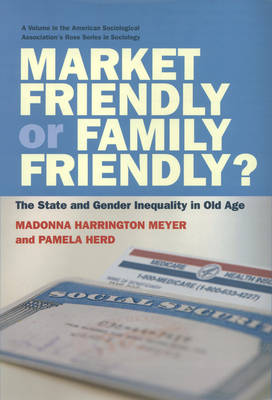
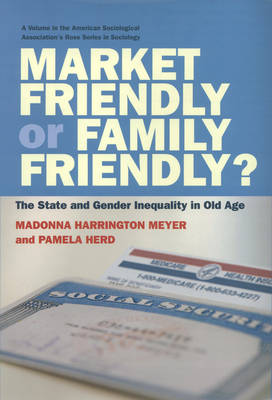
Market Friendly or Family Friendly?
The State and Gender Inequality in Old Age
Madonna Harrington Meyer, Pamela Herd
57,95 €
+ 115 points
Description
Poverty among the elderly is sharply gendered--women over sixty-five are twice as likely as men to live below the poverty line. Older women receive smaller Social Security payments and are less likely to have private pensions. They are twice as likely as men to need a caregiver and twice as likely as men to be a caregiver. Recent efforts of some in Washington to reduce and privatize social welfare programs threaten to exacerbate existing gender disparities among older Americans. They also threaten to exacerbate inequality among women by race, class, and marital status. Madonna Harrington Meyer and Pamela Herd explain these disparities and assess how proposed policy reforms would affect inequality among the aged. Market Friendly or Family Friendly? documents the cumulative disadvantages that make it so difficult for women to achieve economic and health security when they retire. Wage discrimination and occupational segregation reduce women's lifetime earnings, depressing their savings and Social Security benefits. While more women are employed today than a generation ago, they continue to shoulder a greater share of the care burden for children, the disabled, and the elderly. Moreover, as marriage rates have declined, more working mothers are raising children single-handedly. Women face higher rates of health problems due to their lower earnings and the high demands associated with unpaid care work. There are also financial consequences to these family and work patterns. Harrington Meyer and Herd contrast the impact of market friendly programs that maximize individual choice, risk, and responsibility with family friendly programs aimed at redistributing risks and resources. They evaluate popular policies on the current agenda, considering the implications for inequality. But they also evaluate less discussed policy proposals. In particular, minimum benefits for Social Security, as well as credits for raising children, would improve economic security for all, regardless of marital status. National health insurance would also reduce inequality, as would reforms to Medicare, particularly increased coverage of long term care. Just as important are policies such as universal preschool and paid family leave aimed at reducing the disadvantages women face during their working years. The gender gaps that women experience during their work and family lives culminate in income and health disparities between men and women during retirement, but the problem has received scant attention. Market Friendly or Family Friendly? is a comprehensive introduction to this issue, and a significant contribution to the debate over the future of America's entitlement programs. A Volume in the American Sociological Association's Rose Series in Sociology
Spécifications
Parties prenantes
- Auteur(s) :
- Editeur:
Contenu
- Nombre de pages :
- 245
- Langue:
- Anglais
- Collection :
Caractéristiques
- EAN:
- 9780871546463
- Date de parution :
- 18-02-10
- Format:
- Livre broché
- Format numérique:
- Trade paperback (VS)
- Dimensions :
- 145 mm x 221 mm
- Poids :
- 340 g


Seulement chez Librairie Club
+ 115 points sur votre carte client de Librairie Club
Cadeau


Les avis
Nous publions uniquement les avis qui respectent les conditions requises. Consultez nos conditions pour les avis.