


- Retrait en 2 heures
- Assortiment impressionnant
- Paiement sécurisé
- Toujours un magasin près de chez vous
- Retrait en 2 heures
- Assortiment impressionnant
- Paiement sécurisé
- Toujours un magasin près de chez vous



Description
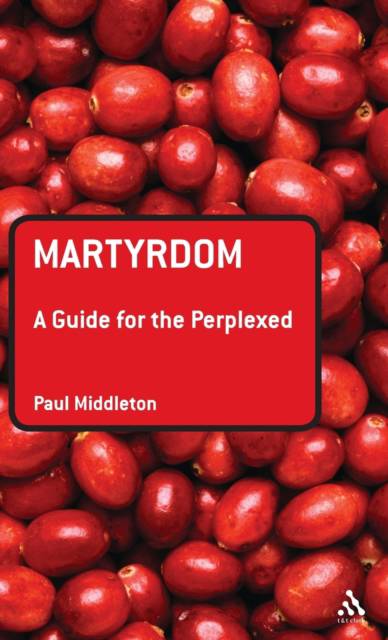
It can be said, almost without exaggeration, that martyrdom has become one of the most pressing theological issues facing the contemporary world. Since the attack on the World Trade Center in 2001, the world has had to face up to an Islamic manifestation of martyrdom. Martyrdom has a long history; as long as individuals have been dying for their faith or cause, others have been telling and more importantly, interpreting their stories. These martyrologies are essentially conflict stories. Whether a Christian confessing her faith before a bemused Roman governor, or a suicide bomber blowing himself up in a crowed cafe in Jerusalem, the way these stories are recounted - positively or negatively - reflect a wider conflict in which the narrator and his community find themselves. Martyr narratives, whether textual, oral, or even a CNN news report, do more than simply report a death; they also contain the interpretative framework by which that death is understood - again positively or negatively. When the death of a martyr is reported, the way in which that story is told places that death within a larger narrative of conflict, which may be regional, global, or even cosmic. The martyr becomes a symbol of the community's desires and hopes, or for that matter, their terrors and fears, but in either case, the martyr is representative of a larger struggle, and often martyrology contains the vision of how the community envisages final victory over their enemy. This book aims to illuminate the way these conflict stories have been told and function (principally, though not exclusively) within Christian, Jewish, and Islamic communities. Continuum's Guides for the Perplexed are clear, concise and accessible introductions to thinkers, writers and subjects that students and readers can find especially challenging - or indeed downright bewildering. Concentrating specifically on what it is that makes the subject difficult to grasp, these books explain and explore key themes and ideas, guiding the reader towards a thorough understanding of demanding material.
Spécifications
Parties prenantes
- Auteur(s) :
- Editeur:
Contenu
- Nombre de pages :
- 224
- Langue:
- Anglais
- Collection :
Caractéristiques
- EAN:
- 9780567032171
- Date de parution :
- 04-08-11
- Format:
- Livre relié
- Format numérique:
- Genaaid
- Dimensions :
- 140 mm x 216 mm
- Poids :
- 408 g


Seulement chez Librairie Club
+ 457 points sur votre carte client de Librairie Club
Cadeau


Les avis
Nous publions uniquement les avis qui respectent les conditions requises. Consultez nos conditions pour les avis.