


- Retrait en 2 heures
- Assortiment impressionnant
- Paiement sécurisé
- Toujours un magasin près de chez vous
- Retrait en 2 heures
- Assortiment impressionnant
- Paiement sécurisé
- Toujours un magasin près de chez vous



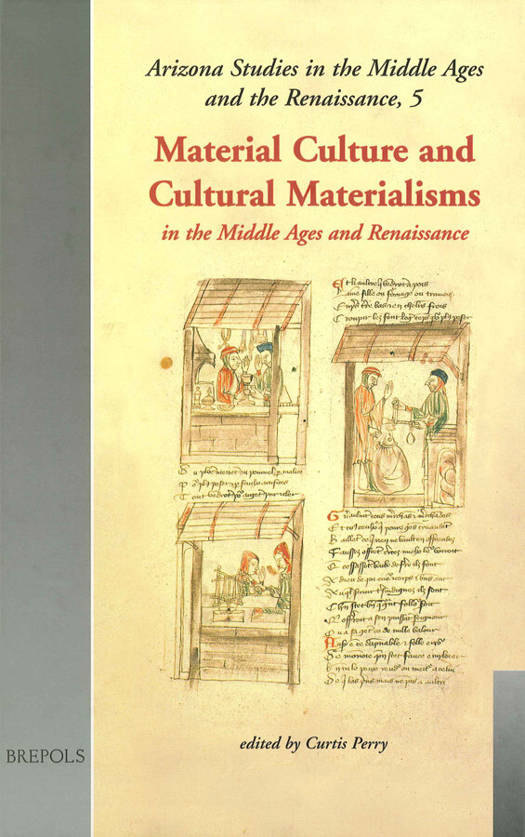
Material Culture and Cultural Materialisms
Curtis Perry
37,10 €
+ 74 points
Description
The phrase 'cultural materialism', coined by Raymond Williams in 1977, names an approach to cultural analysis that interrogates the socio-economic conditions within which artefacts are produced as well as their participation in other ideological and material fields of culture. This approach, which has led to the emergence of cultural studies as a discipline, has also contributed to a sea-change within medieval and Renaissance scholarship. Disciplines that have traditionally studied cultural artefacts like literature and painting have increasingly emphasized the kinds of questions Williams articulated, focusing on the material production and ideological operation of objects once thought of in idealized or purely aesthetic terms. By the same token, historians - whose work, of necessity, has always tended to deal with the material traces of culture - have increasingly been willing to consider the social and ideological importance of art. The increasing popularity of this cultural studies approach to the past has in turn spurred investigation into other kinds of materiality. Recent historical and literary scholarship, for example, has become increasingly aware of the ways in which the lived materiality of the human body informs a range of cultural discourses. Insofar as it still typically attends to the material/ideological significance of the artefacts it considers, such scholarship falls within the generous confines of cultural studies. But where the Marxist tradition inherited from Williams tends to see economic relations as basic, this school of thought sees the experience of the body - always historicized, and understood as the basis for constant symbolic appropriation into other fields of discourse - as an alternative and perhaps more fundamental kind of materiality. Material Culture and Cultural Materialisms in the Middle Ages and the Renaissance attests to the vitality of these approaches to materialist scholarship within and across different periods, disciplines, and national traditions.
Spécifications
Parties prenantes
- Auteur(s) :
- Editeur:
Contenu
- Nombre de pages :
- 270
- Langue:
- Anglais
- Collection :
- Tome:
- n° 5
Caractéristiques
- EAN:
- 9782503510743
- Date de parution :
- 28-02-01
- Format:
- Livre relié
- Format numérique:
- Genaaid
- Dimensions :
- 165 mm x 244 mm
- Poids :
- 594 g


Seulement chez Librairie Club
+ 74 points sur votre carte client de Librairie Club
Cadeau


Les avis
Nous publions uniquement les avis qui respectent les conditions requises. Consultez nos conditions pour les avis.