


- Retrait en 2 heures
- Assortiment impressionnant
- Paiement sécurisé
- Toujours un magasin près de chez vous
- Retrait gratuit dans votre magasin Club
- 7.000.0000 titres dans notre catalogue
- Payer en toute sécurité
- Toujours un magasin près de chez vous



Description
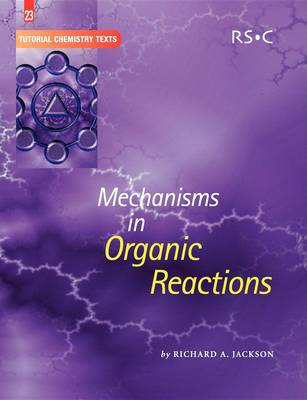
An increasing knowledge and understanding of organic reaction mechanisms has been a major factor in the rapid advance of organic chemistry, biochemistry and pharmacology in the last century. It therefore forms a vital part of today's chemistry courses. Mechanisms in Organic Reactions helps students to make sensible proposals for the mechanisms of particular organic reactions, and then how to distinguish between different possible mechanisms. Techniques for this include product studies, kinetics, and the identification of intermediates. Three chapters on intermediates discuss likely points of attack on molecules by anions, radicals and cations, and the important role of acid- and base-catalysed reactions and radical chain reactions. The prediction of reaction rates and the effects of structural changes on reaction rate are also covered. It concludes with a discussion of molecular reactions, both thermal and photochemical - reactions which provide deep and beautiful insights into the reasons why some reactions go and others do not, and why the majority of real-life reactions involve multi-step processes. The book provides both illuminating insights into fundamental chemistry, and also practical value for students who will go on to teach, research, or be involved in other scientific roles (administration, policy making or journalism). Ideal for the needs of undergraduate chemistry students, Tutorial Chemistry Texts is a major series consisting of short, single topic or modular texts concentrating on the fundamental areas of chemistry taught in undergraduate science courses. Each book provides a concise account of the basic principles underlying a given subject, embodying an independent-learning philosophy and including worked examples.
Spécifications
Parties prenantes
- Auteur(s) :
- Editeur:
Contenu
- Nombre de pages :
- 206
- Langue:
- Anglais
Caractéristiques
- EAN:
- 9780854046423
- Date de parution :
- 31-10-04
- Format:
- Livre broché
- Format numérique:
- Trade paperback (VS)
- Dimensions :
- 189 mm x 246 mm
- Poids :
- 598 g


Seulement chez Librairie Club
+ 44 points sur votre carte client de Librairie Club

Les avis
Nous publions uniquement les avis qui respectent les conditions requises. Consultez nos conditions pour les avis.