


- Retrait en 2 heures
- Assortiment impressionnant
- Paiement sécurisé
- Toujours un magasin près de chez vous
- Retrait en 2 heures
- Assortiment impressionnant
- Paiement sécurisé
- Toujours un magasin près de chez vous



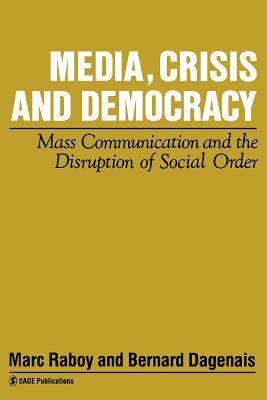
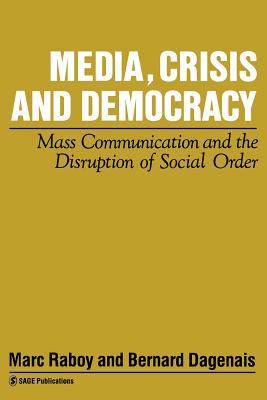
Media, Crisis and Democracy
Mass Communication and the Disruption of Social Order
213,95 €
+ 427 points
Description
"Very useful collection. . . . More thematically coherent than many such volumes. . . . The book is quite topical and readable, considering its depth; most of the authors avoid turgid jargon or intellectual dandyism. . . . The book is not just required reading for academic specialists--it is also accessible to motivated journalists and senior undergraduates. It definitely has a place as a supplementary text in courses on media/ideology, socio-political conflict, and social movements." --Canadian Journal of Communication "Media, Crisis, and Democracy is required reading for anyone with an eye on the future of government. . . . Thought-provoking." --The Journal of Contingencies & Crisis Management "Provocative and radical content. . . . George Gerbner′s essay on ′Violence and Terror In and By the Media′ bears the hallmarks of lucid and engaging analysis which have typified his distinguished scholastic contribution to media studies for so long. . . . It is an interesting and, on occasion, important discussion of the crucial relationship between media and democracy." --Political Studies In modern states, the smooth functioning of democratic politics is inextricably tied to the role of the media in the creation and dissemination of information, images, and ideas. Utilizing a number of different contexts, Media, Crisis, and Democracy explores the ways in which crises serve to highlight the problematic issues of media performance in democratic states. Further, the book examines the relationship between communication and civil society by asking some difficult yet intriguing questions: To what extent do threats to the sovereignty of the nation-state work to subvert the contribution of the media to the democratic political process? Do crises reveal only the existing ideological and hegemonic functions of the mainstream media? Is "crisis" itself a media construct? Media, Crisis, and Democracy explores these theoretical problems through a number of actual cases of media responses to "crises," events ranging from the Gulf War of 1991 to the recent turmoil in Eastern Europe. These examples emphasize the complexities of understanding the role of the media in struggles of identity around nationality, ethnicity, and gender. Graduate and undergraduate students as well as scholars in political communication, mass communication, and media studies will find this book indispensable.
Spécifications
Parties prenantes
- Editeur:
Contenu
- Nombre de pages :
- 208
- Langue:
- Anglais
- Collection :
- Tome:
- n° 7
Caractéristiques
- EAN:
- 9780803986404
- Date de parution :
- 27-05-92
- Format:
- Livre broché
- Format numérique:
- Trade paperback (VS)
- Dimensions :
- 156 mm x 234 mm
- Poids :
- 299 g

Seulement chez Librairie Club
+ 427 points sur votre carte client de Librairie Club
Cadeau


Les avis
Nous publions uniquement les avis qui respectent les conditions requises. Consultez nos conditions pour les avis.