


- Retrait en 2 heures
- Assortiment impressionnant
- Paiement sécurisé
- Toujours un magasin près de chez vous
- Retrait en 2 heures
- Assortiment impressionnant
- Paiement sécurisé
- Toujours un magasin près de chez vous



225,95 €
+ 451 points
Description
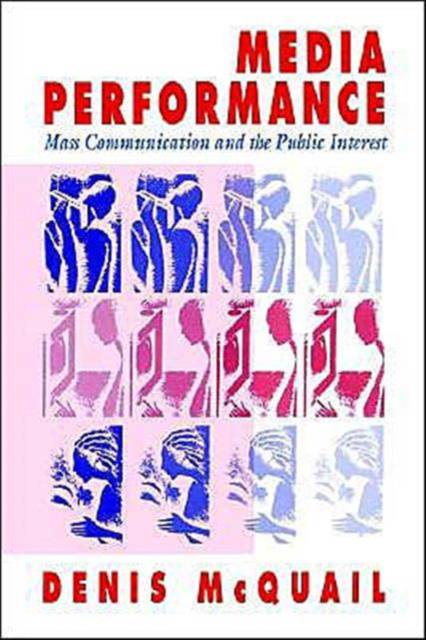
"The author discusses the issue of ′public interest′ and attempts to relate it to the measurement of media performance. The relationship between these two concepts is the main contribution of this book. Many studies focused on these concepts but McQuail provides a thorough attempt to relate them within a framework of communication theory and research." --International Journal of Public Opinion Research "McQuail, a professor of mass communication at the University of Amsterdam, has put together a comprehensive, theory-based review of research on media performance. . . . There are insights in every chapter of this book, which merits the attention of all who conduct research on the media and the public interest. . . . The book is a valuable resource for all who engage in serious thought about the media and the public interest." --Canadian Journal of Communication "McQuail is at his most thorough here, pinning down the meanings he wants, exploring the origins of ′public′ concerns, feeling for the contours and outer limits of policy discourse focused on newspapers and broadcasting, in North America and Western Europe. . . . There is an admirable scholarly thoroughness in his goal. . . . Its strength is its encyclopedic casting of a net into a wide sea of research. . . . It will be a useful book to dip into, guiding the student back to its generous reference list for further enlightenment." --Irish Communication Review "Both comprehensive and penetrating are the adjectives properly applied to this study. . . . This book serves its public well. It is comparative in approach, examining American, British, Continental, and other branches of the media, analyzing the similarities and differences, the strengths and weaknesses. As such it is a book profitably read." --Journal of Popular Culture "Media Performance is a new, far-reaching text by the University of Amsterdam-based scholar that stands back, takes in developments in many countries, and suggests new frameworks for assessing media in the 1990s. This is important reading from a long-time critical observer of the media scene. . . . This is important reading because of the breadth and depth of the arguments and discussion, because of the author′s own record and long-term thinking on these things (this project has been under way for some 15 or more years), and because of its timing--as we all search for new and better ways of assessing media in a changing society. McQuail takes into account technology, changing economic and political ideologies in a variety of countries, and changing conceptions of print and electronic media. Highly recommended." --Communication Booknotes "This far-reaching and important study from a long-time critical observer of the media scene takes in developments in many countries and suggests new frameworks for assessing media in the 1990′s. . . .Important and recommended for good communication collections--this will be widely used and widely cited. --Choice "When a short list of the most important books on communication media in the last half of the 20th century is drawn up at some future date, I would not be surprised to see Denis McQuail′s Media Performance at the top. While others use bloated language and fanciful impressions to talk about ′media performance,′ McQuail, one of the world′s leading media sociologists and all-around scholars, provides a powerful and integrative analysis. There is something orchestral about Media Performance in the way that it draws the best soundings from our literature, presents a cohesive and coherent theory, and offers a rich agenda for research. The formulations here on the often slippery concept of the public interest are explicated and explored with force. This book goes to the top of my list as the most intellectually satisfying book about the media in decades." --Everette E. Dennis, Executive Director, The Freedom Forum Media Studies Center and Editor-in-Chief, Media Studies Journal "Practitioners-in-training, media critics, and communication policy makers alike would benefit from McQuail′s magisterial review and synthesis of this diverse and often fugitive literature. This book proves just how relevant mass communication scholarship can be for hard thinking about real-world problems." --Mark R. Levy, University of Maryland
Spécifications
Parties prenantes
- Auteur(s) :
- Editeur:
Contenu
- Nombre de pages :
- 368
- Langue:
- Anglais
Caractéristiques
- EAN:
- 9780803982956
- Date de parution :
- 24-06-92
- Format:
- Livre broché
- Format numérique:
- Trade paperback (VS)
- Dimensions :
- 157 mm x 232 mm
- Poids :
- 526 g


Seulement chez Librairie Club
+ 451 points sur votre carte client de Librairie Club
Cadeau


Les avis
Nous publions uniquement les avis qui respectent les conditions requises. Consultez nos conditions pour les avis.