


- Retrait en 2 heures
- Assortiment impressionnant
- Paiement sécurisé
- Toujours un magasin près de chez vous
- Retrait gratuit dans votre magasin Club
- 7.000.0000 titres dans notre catalogue
- Payer en toute sécurité
- Toujours un magasin près de chez vous



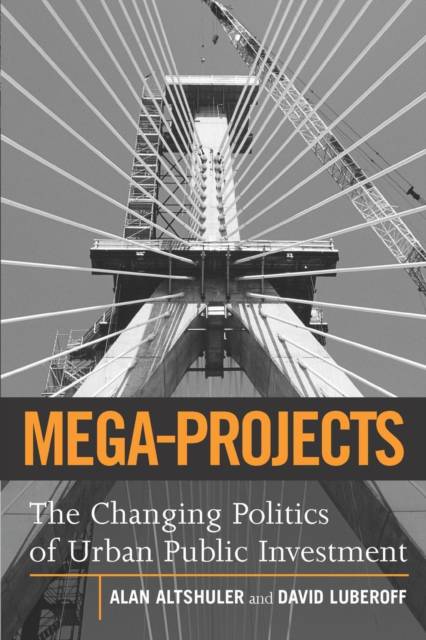
Mega-Projects
The Changing Politics of Urban Public Investment
Alan A Altshuler, David E Luberoff
Livre broché | Anglais
50,95 €
+ 101 points
Description
Since the demise of urban renewal in the early 1970s, the politics of large-scale public investment in and around major American cities has received little scholarly attention. In MEGA-PROJECTS, Alan Altshuler and David Luberoff analyze the unprecedented wave of large-scale (mega-) public investments that occurred in American cities during the 1950s and 1960s; the social upheavals they triggered, which derailed large numbers of projects during the late 1960s and early 1970s; and the political impulses that have shaped a new generation of urban mega-projects in the decades since. They also appraise the most important consequences of policy shifts over this half-century and draw out common themes from the rich variety of programmatic and project developments that they chronicle. The authors integrate narratives of national as well as state and local policymaking, and of mobilization by (mainly local) project advocates, with a profound examination of how well leading theories of urban politics explain the observed realities. The specific cases they analyze include a wide mix of transportation and downtown revitalization projects, drawn from numerous regions--most notably Boston, Denver, Los Angeles, New York City, Chicago, Atlanta, Dallas, Portland, and Seattle. While their original research focuses on highway, airport, and rail transit programs and projects, they draw as well on the work of others to analyze the politics of public investment in urban renewal, downtown retailing, convention centers, and professional sports facilities. In comparing their findings with leading theories of urban and American politics, Altshuler and Luberoff arrive at some surprising findings about which perform best and also reveal some important gaps in the literature as a whole. In a concluding chapter, they examine the potential effects of new fiscal pressures, business mobilization to relax environmental constraints, and security concerns in the wake of September 11. And they make clear their own views about how best to achieve a balance between developmental, environmental, and democratic values in public investment decisionmaking. Integrating fifty years of urban development history with leading theories of urban and American politics, MEGA-PROJECTS provides significant new insights into urban and intergovernmental politics.
Spécifications
Parties prenantes
- Auteur(s) :
- Editeur:
Contenu
- Nombre de pages :
- 339
- Langue:
- Anglais
Caractéristiques
- EAN:
- 9780815701293
- Date de parution :
- 30-04-03
- Format:
- Livre broché
- Format numérique:
- Trade paperback (VS)
- Dimensions :
- 163 mm x 228 mm
- Poids :
- 530 g


Seulement chez Librairie Club
+ 101 points sur votre carte client de Librairie Club
Cadeau

Cadeau


Les avis
Nous publions uniquement les avis qui respectent les conditions requises. Consultez nos conditions pour les avis.