


- Retrait en 2 heures
- Assortiment impressionnant
- Paiement sécurisé
- Toujours un magasin près de chez vous
- Retrait gratuit dans votre magasin Club
- 7.000.0000 titres dans notre catalogue
- Payer en toute sécurité
- Toujours un magasin près de chez vous

Description
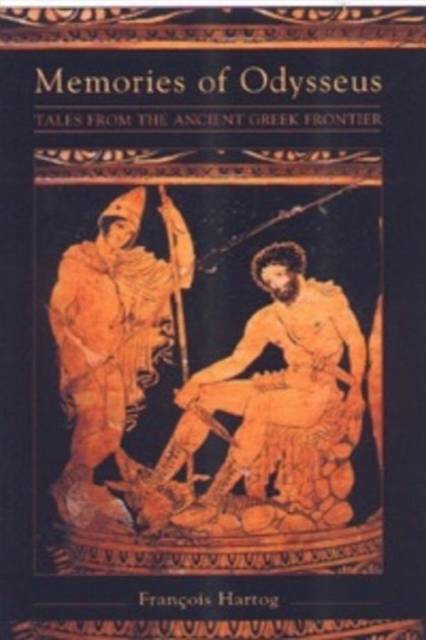
This is a book about identity, about how the ancient Greeks saw themselves and others, and what this tells us in turn about Greek mentality and culture. It looks at voyagers and explorers, at travels in reality and in the mind, and shows what these reveal at key points in Greek history from the creation of Homer's monumental epic around 700 BC to the high Roman imperial period some eight hundred years later. The author takes us first to the journeyings of Odysseus, considering the returning warrior's concerns of witness and memory and finding in the epic the themes that will preoccupy the Greeks over the centuries. He then travels to Egypt with Herodotus, to the problematically 'barbarian' world of Persia and the Near East with Alexander the Great, to old Greece with the fictional Scythian Anacharsis, to the new Greek world under Roman domination with Polybius, Dionysius of Halicarnassos and Strabo, and finally to the Asia Minor of the first-century AD sage Apollonius of Tyana in the company of Philostratos. He examines both what their representations of these lands meant in their own day and how they were received in later times. He looks in particular at the importance of the invention of the barbarian and the "other", first in the theoretical process of desribing and accounting for the outside world, and secondly at the justification it gives for the practical reshaping of alien space through conquest and assimilation - themes which have had, as he points out, a more recent resonance. François Hartog draws widely on ancient and modern authors to create a cultural history of ancient Greece that sheds a new and revealing light on the Greeks and the history of humankind more generally.
Spécifications
Parties prenantes
- Auteur(s) :
- Editeur:
Contenu
- Nombre de pages :
- 266
- Langue:
- Anglais
- Collection :
Caractéristiques
- EAN:
- 9780748614479
- Date de parution :
- 29-06-01
- Format:
- Livre broché
- Format numérique:
- Trade paperback (VS)
- Dimensions :
- 156 mm x 234 mm
- Poids :
- 385 g


Seulement chez Librairie Club
+ 135 points sur votre carte client de Librairie Club
Concours


Les avis
Nous publions uniquement les avis qui respectent les conditions requises. Consultez nos conditions pour les avis.