


- Retrait en 2 heures
- Assortiment impressionnant
- Paiement sécurisé
- Toujours un magasin près de chez vous
- Retrait en 2 heures
- Assortiment impressionnant
- Paiement sécurisé
- Toujours un magasin près de chez vous



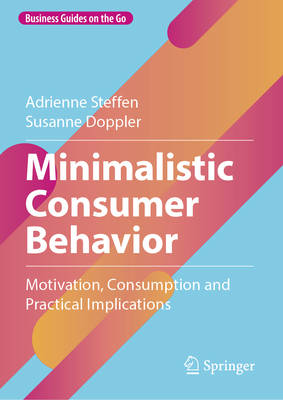
Minimalistic Consumer Behavior
Motivation, Consumption and Practical Implications
Adrienne Steffen, Susanne Doppler
41,45 €
+ 82 points
Description
In developed countries people still place great emphasis on materialistic possessions for a happy life; however, many possessions produce tension and lead to burden. As a result, an anti-consumption movement has emerged that embraces the notion of a minimalistic lifestyle. This book combines research, personal insights, and real-world examples to explore the motivations behind minimalist choices and their impact on individuals, communities, and the environment. It examines how consumer behavior is influenced by cultural, economic, and psychological factors, and how adopting minimalist principles can foster well-being and sustainability. The authors also address voluntary simplicity, sustainable marketing, and discuss the implications of minimalistic consumer behavior for achieving SDG 12, Responsible Consumption and Production.
In addition to a theoretical examination for scholars, researchers, and academics, this book provides guidelines for marketing practitioners seeking to engage ethically with increasingly conscious consumers and to design value propositions consistent with minimalist and sustainable principles.
Spécifications
Parties prenantes
- Auteur(s) :
- Editeur:
Contenu
- Nombre de pages :
- 151
- Langue:
- Anglais
- Collection :
Caractéristiques
- EAN:
- 9783032227577
- Date de parution :
- 20-05-26
- Format:
- Livre relié
- Format numérique:
- Genaaid
- Dimensions :
- 148 mm x 210 mm
- Poids :
- 358 g


Seulement chez Librairie Club
+ 82 points sur votre carte client de Librairie Club
Cadeau


Les avis
Nous publions uniquement les avis qui respectent les conditions requises. Consultez nos conditions pour les avis.