


- Retrait en 2 heures
- Assortiment impressionnant
- Paiement sécurisé
- Toujours un magasin près de chez vous
- Retrait gratuit dans votre magasin Club
- 7.000.0000 titres dans notre catalogue
- Payer en toute sécurité
- Toujours un magasin près de chez vous

Description
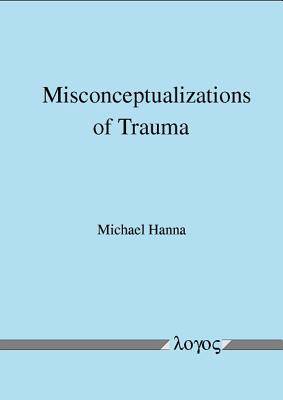
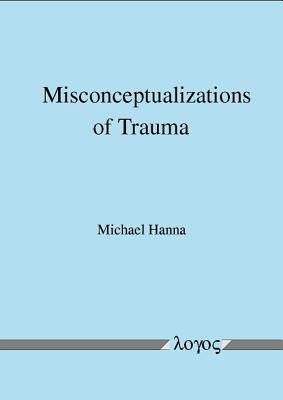
In recent decades, the study of trauma has been one of the fastest-growing fields of investigation in Clinical Psychology. But how do researchers and therapists themselves actually conceptualize "trauma"? Despite being an intangible, phenomena of relations between persons, which has an ever-evolving manifestation, many researchers and clinicians have a tendency to oversimplify trauma as just being some sort of thing, with a static and substantial existence of its own. The present work is an epistemological investigation of how Psychologists think about the phenomena called "trauma". One by one, 20 key articles from the international scientific literature on trauma are presented and examined. Using an approach of textual and logical analysis, it is shown how trauma is often implicitly misconceptualized in this overly simplifying way as being a tangible and static thing. This book also explains which negative consequences these oversimplifications would have in the actual therapy with patients. This investigation gives equal attention to the scientific literature in English, German, French, and Spanish. So moreover, it becomes apparent in the present work that American, German, French, and Latino researchers have rather different understandings of trauma, and even more so that they have different ideas about what are the best approaches to therapy. The present investigation is therefore the first work which allows readers a comparative look at all four of these culturally different understandings of trauma. The work concludes that regardless of a person's preferred orientations in Psychology, at an epistemological level a "dialectical-ecological" level of thinking is necessary to adequately understand the clinical phenomena of trauma in all its true complexity.
Spécifications
Parties prenantes
- Auteur(s) :
- Editeur:
Contenu
- Nombre de pages :
- 216
- Langue:
- Anglais
Caractéristiques
- EAN:
- 9783832503024
- Date de parution :
- 15-09-03
- Format:
- Livre broché
- Format numérique:
- Trade paperback (VS)
- Dimensions :
- 170 mm x 239 mm
- Poids :
- 398 g


Seulement chez Librairie Club
+ 196 points sur votre carte client de Librairie Club
Cadeau

Cadeau


Les avis
Nous publions uniquement les avis qui respectent les conditions requises. Consultez nos conditions pour les avis.