


- Retrait en 2 heures
- Assortiment impressionnant
- Paiement sécurisé
- Toujours un magasin près de chez vous
- Retrait en 2 heures
- Assortiment impressionnant
- Paiement sécurisé
- Toujours un magasin près de chez vous



88,45 €
+ 176 points
Description
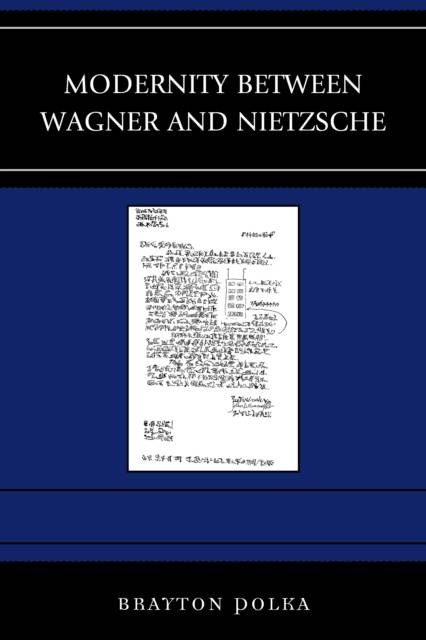
Modernity between Wagner and Nietzsche analyzes the operas and writings of Wagner in order to prove that the ideas on which they are based contradict and falsify the values that are fundamental to modernity. This book also analyzes the ideas that are central to the philosophy of Nietzsche, demonstrating that the values on the basis of which he breaks with Wagner and repudiates their common mentor, Schopenhauer, are those fundamental to modernity. Brayton Polka makes use of the critical distinction that Kierkegaard draws between Christianity and Christendom. Christianity represents what Nietzsche calls the faith that is presupposed in unconditionally willing the truth in saying yes to life. Christendom, in contrast, represents the bad faith of nihilism in saying no to life. Polka then shows that Wagner, in following Schopenhauer, represents Christendom with the demonstration in his operas that life is nothing but death and death is nothing but life. In other words, the purpose of the will for Wagner is to annihilate the will, since it is only in and through death that human beings are liberated from life as willfully sinful. Nietzsche, in contrast, is consistent with the biblical concept that existence is created from nothing, from nothing that is not made in the image of God, that any claim that the will can will not to will is contradictory and hence false. For not to will is, in truth, still to will nothing. There is then, Nietzsche shows, no escape from the will. Either human beings will the truth in saying yes to life as created from nothing, or in truly willing nothing, they say no to life in worshiping the God of Christendom who is dead.
Spécifications
Parties prenantes
- Auteur(s) :
- Editeur:
Contenu
- Nombre de pages :
- 222
- Langue:
- Anglais
- Collection :
Caractéristiques
- EAN:
- 9781498512503
- Date de parution :
- 12-04-19
- Format:
- Livre broché
- Format numérique:
- Trade paperback (VS)
- Dimensions :
- 150 mm x 226 mm
- Poids :
- 340 g


Seulement chez Librairie Club
+ 176 points sur votre carte client de Librairie Club
Cadeau


Les avis
Nous publions uniquement les avis qui respectent les conditions requises. Consultez nos conditions pour les avis.