


- Retrait en 2 heures
- Assortiment impressionnant
- Paiement sécurisé
- Toujours un magasin près de chez vous
- Retrait en 2 heures
- Assortiment impressionnant
- Paiement sécurisé
- Toujours un magasin près de chez vous



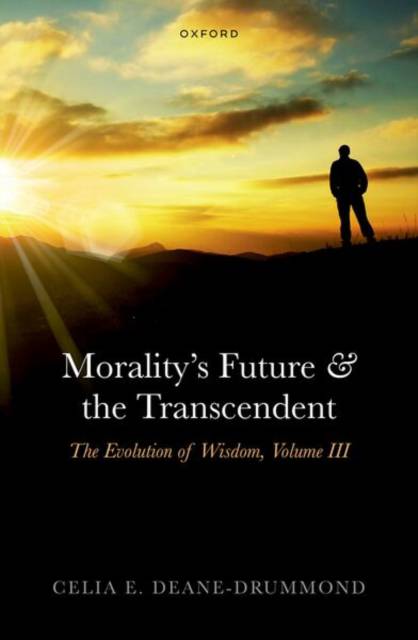
Morality's Future and the Transcendent
The Evolution of Wisdom, Volume III
Celia E Deane-Drummond
Livre relié | Anglais
217,95 €
+ 435 points
Description
This is the third and final volume of a three-part work exploring the evolution of wisdom, understood broadly to include both practical wisdom and humanity's capacity to connect with the divine. The first volume was primarily concerned with interspecies relationships and the core moral capacities of justice, compassion, and practical wisdom, arguing in the light of that analysis for the need for a different theoretical framing of the moral life, based on evolutionary, theological, and philosophical arguments. The second volume considered the darker side of human nature, the tendency for different vices and their evolutionary trajectories. This third volume focuses on humanity's capacity to reach for the transcendent within an evolutionary context and in dialogue with those moral capabilities associated with the spiritual life, including the theological virtues of faith, hope, and charity, alongside gratitude, wisdom, humility, grace, and joy. The evolution of compassion is now situated within the context of the development of humanity's capacity for mercy. This book weaves together and interrogates philosophical concepts, especially those inspired by the work of Paul Ricoeur, alongside moral psychology and the classic moral theology of the virtues in the work of Thomas Aquinas, considered in dialogue with the work of other theologians such as Karl Rahner. This volume is, therefore, concerned with the fundamental question of what difference the spiritual life makes to human capacities to do good in the light of what we know about our evolutionary past and current psychological theories, while also providing a critique of the latter through theological and philosophical epistemologies. It is relevant to the broader question of how change for the good might be possible in human behaviour, especially in the light of the serious global eco-social challenges facing humanity in the twenty-first century.
Spécifications
Parties prenantes
- Auteur(s) :
- Editeur:
Contenu
- Nombre de pages :
- 288
- Langue:
- Anglais
Caractéristiques
- EAN:
- 9780198846444
- Date de parution :
- 22-04-26
- Format:
- Livre relié
- Format numérique:
- Genaaid
- Dimensions :
- 163 mm x 237 mm
- Poids :
- 585 g



Seulement chez Librairie Club
+ 435 points sur votre carte client de Librairie Club
Cadeau


Les avis
Nous publions uniquement les avis qui respectent les conditions requises. Consultez nos conditions pour les avis.