


- Retrait en 2 heures
- Assortiment impressionnant
- Paiement sécurisé
- Toujours un magasin près de chez vous
- Retrait gratuit dans votre magasin Club
- 7.000.0000 titres dans notre catalogue
- Payer en toute sécurité
- Toujours un magasin près de chez vous



18,68 €
+ 18 points
Description
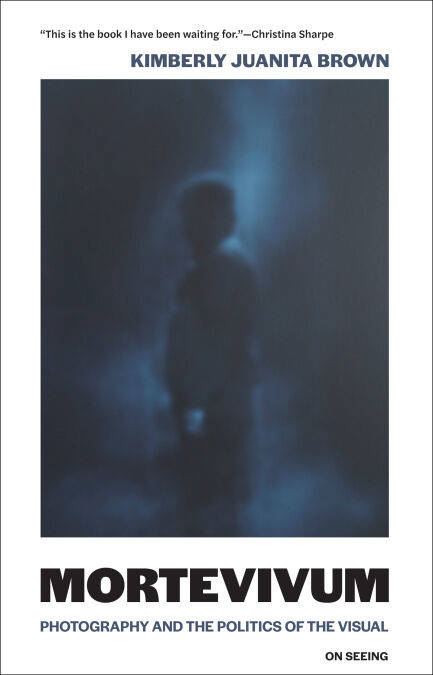
A powerful examination of the unsettling history of photography and its fraught relationship to global antiblackness.
Since photography’s invention, black life has been presented as fraught, short, agonizingly filled with violence, and indifferent to intervention: living death—mortevivum—in a series of still frames that refuse a complex humanity. In Mortevivum, Kimberly Juanita Brown shows us how the visual logic of documentary photography and the cultural legacy of empire have come together to produce the understanding that blackness and suffering—and death—are inextricable. Brown traces this idea from the earliest images of the enslaved to the latest newspaper photographs of black bodies, from the United States and South Africa to Haiti and Rwanda, documenting the enduring, pernicious connection between photography and a global history of antiblackness.
Photography's history, inextricably linked to colonialism and white supremacy, is a catalog of othering, surveillance, and the violence of objectification. In the genocide in Rwanda, for instance, photographs after the fact tell viewers that blackness comes with a corresponding violence that no human intervention can abate. In Haiti, the first black republic in the Western Hemisphere, photographic “evidence” of its sovereign failure suggests that the formerly enslaved cannot overthrow their masters and survive to tell the tale. And in South Africa and the United States, a loop of racial violence reminds black subjects of their lower-class status mandated via the state. Illustrating the global nature of antiblackness that pervades photographic archives of the present and the past, Mortevivum reveals how we live in a repetition of imagery signaling who lives and who dies on a gelatin silver print—on a page in a book, on the cover of newspaper, and in the memory of millions.
The URL for this publication is https://on-seeing-mortevivum.org/.
Since photography’s invention, black life has been presented as fraught, short, agonizingly filled with violence, and indifferent to intervention: living death—mortevivum—in a series of still frames that refuse a complex humanity. In Mortevivum, Kimberly Juanita Brown shows us how the visual logic of documentary photography and the cultural legacy of empire have come together to produce the understanding that blackness and suffering—and death—are inextricable. Brown traces this idea from the earliest images of the enslaved to the latest newspaper photographs of black bodies, from the United States and South Africa to Haiti and Rwanda, documenting the enduring, pernicious connection between photography and a global history of antiblackness.
Photography's history, inextricably linked to colonialism and white supremacy, is a catalog of othering, surveillance, and the violence of objectification. In the genocide in Rwanda, for instance, photographs after the fact tell viewers that blackness comes with a corresponding violence that no human intervention can abate. In Haiti, the first black republic in the Western Hemisphere, photographic “evidence” of its sovereign failure suggests that the formerly enslaved cannot overthrow their masters and survive to tell the tale. And in South Africa and the United States, a loop of racial violence reminds black subjects of their lower-class status mandated via the state. Illustrating the global nature of antiblackness that pervades photographic archives of the present and the past, Mortevivum reveals how we live in a repetition of imagery signaling who lives and who dies on a gelatin silver print—on a page in a book, on the cover of newspaper, and in the memory of millions.
The URL for this publication is https://on-seeing-mortevivum.org/.
Spécifications
Parties prenantes
- Auteur(s) :
- Editeur:
Contenu
- Nombre de pages :
- 184
- Langue:
- Anglais
- Collection :
Caractéristiques
- EAN:
- 9780262378161
- Date de parution :
- 05-02-2024
- Format:
- Ebook
- Protection digitale:
- Adobe DRM
- Format numérique:
- ePub


Seulement chez Librairie Club
+ 18 points sur votre carte client de Librairie Club
Cadeau

Cadeau


Les avis
Nous publions uniquement les avis qui respectent les conditions requises. Consultez nos conditions pour les avis.