


- Retrait en 2 heures
- Assortiment impressionnant
- Paiement sécurisé
- Toujours un magasin près de chez vous
- Retrait en 2 heures
- Assortiment impressionnant
- Paiement sécurisé
- Toujours un magasin près de chez vous



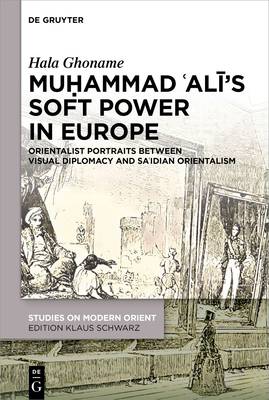
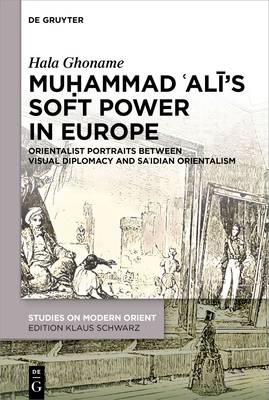
Muḥammad ʿalī's Soft Power in Europe
Orientalist Portraits Between Visual Diplomacy and Saʿidian Orientalism
Hala Ghoname
133,45 €
+ 266 points
Description
The profusion of literature on Muḥammad ʿAlī's Egypt (1805-1849) makes the Bāshā's epoch significantly well-documented; however, one facet is perceptibly brushed out or rather overlooked. Published in 1945, Gaston Wiet's Mohammed Ali et Les Beaux-Arts has been the only book deliberating the visual and artistic aspects of Muḥammad ʿAlī's reign, and while it offers an extended survey of the Ottoman governor's iconography and visual relics, the book wants the rudiments of critical analysis. The trivial number of works covering this facet of the Bāshā's sovereignty has made it barely examined, rendering the research field with a significant epistemological gap, namely regarding art and historiography patronage for political triggers. Embarking from where Wiet's work has halted, this book attempts to critically analyze the artistic component of Muḥammad ʿAlī's reign by dealing with the pictorial crops of the nineteenth century's orientalist-travelers, assessing their role within the context of contemporaneous trends in Ottoman and European diplomacy and tracing Muḥammad ʿAlī's early attempts for using pictorial propaganda and historiography in order to claim political legitimacy and to attain European recognition. The book conducts an in-depth analysis of the Bāshā's historiographic making process with a focus on how text worked art and visual politics. The book takes an innovative and interdisciplinary approach, which commingles tools of visual analysis and contextual investigation, in its consideration of the aspects of Muḥammad ʿAlī Bāshā's foreign policy, this book closely examines topics associated with cultural systems, modernization, traditionalism, and changeability in Egypt of the nineteenth century, while assessing the impact of global connectedness not only on Muslim cultures and societies but also on European public opinion through highlighting how Muslim rulers had adapted appealing themes and employed cultural magnets in their visual propaganda to fit within the pervasive international diplomatic trends.
Spécifications
Parties prenantes
- Auteur(s) :
- Editeur:
Contenu
- Nombre de pages :
- 359
- Langue:
- Anglais
- Collection :
- Tome:
- n° 50
Caractéristiques
- EAN:
- 9783111327778
- Date de parution :
- 16-12-24
- Format:
- Livre relié
- Format numérique:
- Genaaid
- Dimensions :
- 156 mm x 234 mm
- Poids :
- 680 g


Seulement chez Librairie Club
+ 266 points sur votre carte client de Librairie Club
Cadeau


Les avis
Nous publions uniquement les avis qui respectent les conditions requises. Consultez nos conditions pour les avis.