


- Retrait en 2 heures
- Assortiment impressionnant
- Paiement sécurisé
- Toujours un magasin près de chez vous
- Retrait en 2 heures
- Assortiment impressionnant
- Paiement sécurisé
- Toujours un magasin près de chez vous



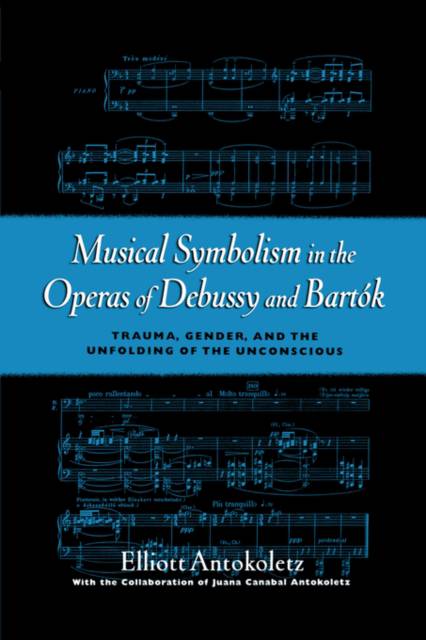
Musical Symbolism in the Operas of Debussy and Bartok
Trauma, Gender, and the Unfolding of the Unconscious
Elliott Antokoletz
373,45 €
+ 746 points
Description
Two early twentieth-century operas -- Debussy's Pelleas et Melisande (1902) and Bartok's Duke Bluebeard's Castle (1911) -- transformed the traditional major/minor scale system into a new musical language. This new language was based almost exclusively on interactions between folk modalities and their more abstract symmetrical transformations. Elliott Antokoletz reveals not only the new musical language of these operas, but also the way in which they share a profound correspondence with the growing symbolist literary movement as reflected in their libretti. In the symbolist literary movement, authors reacted to the realism of nineteenth-century theatre by conveying meaning by suggestion, rather than direct statement. The symbolist conception included a new interest in psychological motivation and consciousness manifested itself in metaphor, ambiguity, and symbol. In this groundbreaking study, Antokoletz links the new musical language of these two operas with this symbolist conception and reveals a direct connection between the Debussy and Bartok operas. He shows how the opposing harmonic extremes serve as a basis for the dramatic polarity between real-life beings and symbols of fate. He also explores how the libretti by Franco-Belgian poet Maurice Maeterlinck (Pelleas et Melisande) and his Hungarian disciple Bela Balazs (Duke Bluebeard's Castle) transform the internal concept of subconscious motivation into an external one, one in which fate controls human emotions and actions. Using a pioneering approach to theoretical analysis, Antokoletz, explores the new musico-dramatic relations within their larger historical, social psychological, philosophical, and aesthetic contexts.
Spécifications
Parties prenantes
- Auteur(s) :
- Editeur:
Contenu
- Nombre de pages :
- 360
- Langue:
- Anglais
- Collection :
Caractéristiques
- EAN:
- 9780195103830
- Date de parution :
- 22-07-04
- Format:
- Livre relié
- Format numérique:
- Genaaid
- Dimensions :
- 161 mm x 248 mm
- Poids :
- 684 g


Seulement chez Librairie Club
+ 746 points sur votre carte client de Librairie Club
Cadeau


Les avis
Nous publions uniquement les avis qui respectent les conditions requises. Consultez nos conditions pour les avis.