


En raison d'une grève chez bpost, des retards de livraison peuvent survenir. Besoin de quelque chose en urgence ? Optez pour un retrait en magasin ou rendez-vous dans une Librairie Club à proximité.
- Retrait en 2 heures
- Assortiment impressionnant
- Paiement sécurisé
- Toujours un magasin près de chez vous
En raison d'une grève chez bpost, des retards de livraison peuvent survenir. Besoin de quelque chose en urgence ? Optez pour un retrait en magasin ou rendez-vous dans une Librairie Club à proximité.
- Retrait en 2 heures
- Assortiment impressionnant
- Paiement sécurisé
- Toujours un magasin près de chez vous



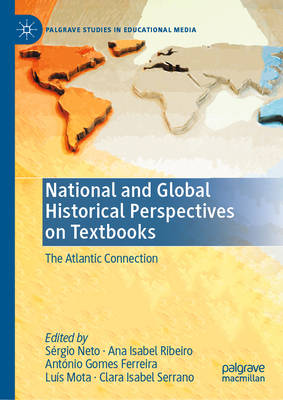
National and Global Historical Perspectives on Textbooks
The Atlantic Connection
194,95 €
+ 389 points
Description
This edited book discusses the historical role of textbooks in promoting national ideology. It brings together chapters from several continents, establishing a dialogue between the Global North and South, and between authors from relatively newly independent states and those working in countries that were once centres of colonial empire. Anchored in the symbolic space of the Atlantic, the book examines how empires, nations, and identities were historically constructed and contested across the ocean that once linked Europe, Africa, and the Americas through trade, slavery, and migration. It highlights the enduring influence of colonial legacies in textbooks from Portugal, Spain, Brazil, Cabo Verde, Guinea-Bissau, Mexico, Argentina, Italy, and beyond, revealing how these narratives continue to shape civic imagination and historical consciousness. Clear, engaging, and highly accessible, National and Global Historical Perspectives on Textbooks: The Atlantic Connection invites readers to examine closely what schoolbooks convey, through words and images, and to reflect on how these narratives shape public memory and civic life. By combining theoretical insights with comparative perspectives, the book offers a fresh and timely understanding of the role of education in an era marked by global inequalities, renewed nationalism, and debates over historical truth. This volume will appeal not only to researchers and students in textbook studies, history education, curriculum theory, and memory politics, but also to teachers, policymakers, and anyone interested in how societies craft the stories they tell their children.
Spécifications
Parties prenantes
- Editeur:
Contenu
- Nombre de pages :
- 300
- Langue:
- Anglais
- Collection :
Caractéristiques
- EAN:
- 9783032151711
- Date de parution :
- 30-05-26
- Format:
- Livre relié
- Format numérique:
- Genaaid
- Dimensions :
- 148 mm x 210 mm

Seulement chez Librairie Club
+ 389 points sur votre carte client de Librairie Club
Cadeau


Les avis
Nous publions uniquement les avis qui respectent les conditions requises. Consultez nos conditions pour les avis.