


- Retrait en 2 heures
- Assortiment impressionnant
- Paiement sécurisé
- Toujours un magasin près de chez vous
- Retrait en 2 heures
- Assortiment impressionnant
- Paiement sécurisé
- Toujours un magasin près de chez vous




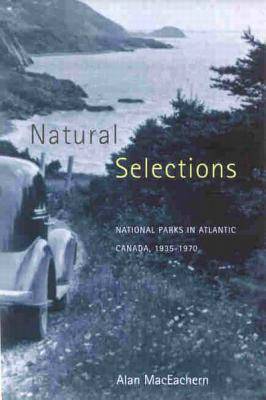
Natural Selections
National Parks in Atlantic Canada, 1935-1970
Alan Maceachern
Livre relié | Anglais
48,45 €
+ 96 points
Description
During the Depression the Canadian National Parks Branch was under pressure to make the park system truly national, to bring the advantages of parks to all provinces. In Atlantic Canada, however, it found itself dealing with an environment that was far different from what it was accustomed to in Western Canada. The land areas were smaller, flatter, and, having been settled for generations, could hardly be considered wild. Wildlife was smaller and less numerous.
Natural Selections traces the history of the first four parks in Atlantic Canada through the selection, expropriation, development, and management stages. Alan MacEachern shows how the Parks Branch's preconceptions about the landscape and people of the region shaped the parks created there. In doing so he details the evolution of the park system, from the conservation movement early in the century to the rise of the ecology movement. MacEachern analyzes Parks Canada's efforts to fulfill its twin mandates of preservation and use, arguing that the agency never favoured one over the other but oscillated between more or less interventionist in ensuring both. Touching on a wide range of matters - from landscape aesthetics to tourism promotion, from DDT to Martin Luther King - Natural Selections expands our understanding of the relation between nature and culture in the twentieth century.Spécifications
Parties prenantes
- Auteur(s) :
- Editeur:
Contenu
- Nombre de pages :
- 384
- Langue:
- Anglais
Caractéristiques
- EAN:
- 9780773521575
- Date de parution :
- 23-04-01
- Format:
- Livre relié
- Format numérique:
- Genaaid
- Dimensions :
- 160 mm x 237 mm
- Poids :
- 648 g


Seulement chez Librairie Club
+ 96 points sur votre carte client de Librairie Club
Cadeau


Les avis
Nous publions uniquement les avis qui respectent les conditions requises. Consultez nos conditions pour les avis.