


- Retrait en 2 heures
- Assortiment impressionnant
- Paiement sécurisé
- Toujours un magasin près de chez vous
- Retrait en 2 heures
- Assortiment impressionnant
- Paiement sécurisé
- Toujours un magasin près de chez vous



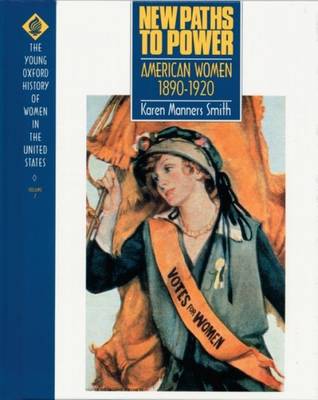
Description
In the 30 years from 1890 to 1920--a period known as the Progressive Era--an eager and purposeful generation of American women swept out of the house and marched onto a new stage of freedom and responsibility. Many of them tried to improve their world by seeking work to better provide for themselves and their families or by tackling social problems that affected the country as a whole.
Girls and women (many of them immigrants or the daughters of immigrants) swelled the growing ranks of wage earners and of high school and college students. African American women, even in the racially divided South, increasingly became teachers or owners of small businesses.
Just as striking as the increase of women in the work force was the voluntary activity of both black and white women in associations organized for social reform. For working-class women, the Progressive Era was a chance to focus their energies on the labor movement and the campaign for workers' protection and child labor laws. For middle-class women raised in the traditions of women's voluntary associations, the chance to join the attack on the evils of industrial society was an extraordinary opportunity.
Following leaders such as suffragist Carrie Chapman Catt, birth control pioneer Margaret Sanger, black journalist Ida B. Wells, and social worker Jane Addams, women made significant personal and social gains. In 1920 they won the right to vote. Though the Progressive Era did not bring women full social and political equality, it was nevertheless an era aptly named, for it was a time when an unprecedented number of women began to find New Paths to Power and fulfillment.
Girls and women (many of them immigrants or the daughters of immigrants) swelled the growing ranks of wage earners and of high school and college students. African American women, even in the racially divided South, increasingly became teachers or owners of small businesses.
Just as striking as the increase of women in the work force was the voluntary activity of both black and white women in associations organized for social reform. For working-class women, the Progressive Era was a chance to focus their energies on the labor movement and the campaign for workers' protection and child labor laws. For middle-class women raised in the traditions of women's voluntary associations, the chance to join the attack on the evils of industrial society was an extraordinary opportunity.
Following leaders such as suffragist Carrie Chapman Catt, birth control pioneer Margaret Sanger, black journalist Ida B. Wells, and social worker Jane Addams, women made significant personal and social gains. In 1920 they won the right to vote. Though the Progressive Era did not bring women full social and political equality, it was nevertheless an era aptly named, for it was a time when an unprecedented number of women began to find New Paths to Power and fulfillment.
Spécifications
Parties prenantes
- Auteur(s) :
- Editeur:
Contenu
- Nombre de pages :
- 144
- Langue:
- Anglais
- Collection :
- Tome:
- n° 7
Caractéristiques
- EAN:
- 9780195081114
- Date de parution :
- 22-09-94
- Format:
- Livre relié
- Format numérique:
- Genaaid
- Dimensions :
- 199 mm x 243 mm
- Poids :
- 521 g


Seulement chez Librairie Club
+ 84 points sur votre carte client de Librairie Club
Cadeau


Les avis
Nous publions uniquement les avis qui respectent les conditions requises. Consultez nos conditions pour les avis.