


En raison d'une grève chez bpost, des retards de livraison peuvent survenir. Besoin de quelque chose en urgence ? Optez pour un retrait en magasin ou rendez-vous dans une Librairie Club à proximité.
- Retrait en 2 heures
- Assortiment impressionnant
- Paiement sécurisé
- Toujours un magasin près de chez vous
En raison d'une grève chez bpost, des retards de livraison peuvent survenir. Besoin de quelque chose en urgence ? Optez pour un retrait en magasin ou rendez-vous dans une Librairie Club à proximité.
- Retrait en 2 heures
- Assortiment impressionnant
- Paiement sécurisé
- Toujours un magasin près de chez vous



165,95 €
Description
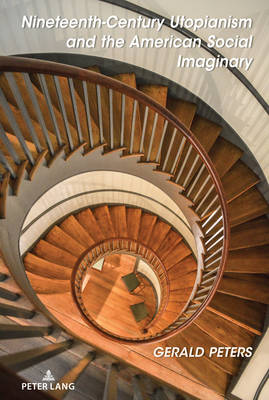
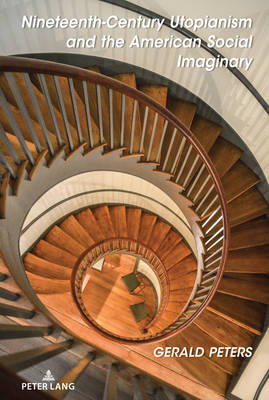
Religious sectarianism played a significant role in the early settlement and social development of the United States. Although historians have minimized what these societies contributed to the creation of a uniquely American "social imaginary," this era of social experimentalism drew the attention of highly influential European writers including Goethe, Tolstoy, Marx, and Weber. More recent social thinkers like Benedict Anderson, Charles Taylor, and Robert Wuthnow emphasize the importance of discourses (familial, dynastic, religious) in the creation of community. They contend that literary analysis, in particular, is critical for understanding how "social imaginaries" develop, sustain, and transform themselves. Drawing on thinkers like Marx, Weber, Dawkins, and Goethe, Nineteenth-Century Utopianism and the American Social Imaginary explores the "evolution" of the American social imaginary within these discursive traditions. Goethe, in particular, becomes a major contributor to this discussion, not simply because of his profound international influence during the period, but because he was a contemporary witness to these events. His final novel Wilhelm Meister's Journeyman Years (1829) depicts an emigrant society about to start an intentional community in the New World as an illustration of "cultural metamorphosis" that becomes central to understanding social development during the period. Utilizing a theoretical framework that draws on Lacan, the Frankfurt School, and post-structuralist thinkers like Fredric Jameson, Slavoj Zizek, Ernesto Laclau, and Chantal Mouffe, the author shows how communities develop within specific discursive structures and how American adaptations of these structures have the potential to create more radical and equitable democracies.
Spécifications
Parties prenantes
- Auteur(s) :
- Editeur:
Contenu
- Nombre de pages :
- 206
- Langue:
- Anglais
Caractéristiques
- EAN:
- 9781433181979
- Date de parution :
- 12-03-21
- Format:
- Livre relié
- Format numérique:
- Genaaid
- Dimensions :
- 152 mm x 229 mm
- Poids :
- 462 g


Seulement chez Librairie Club
Cadeau


Les avis
Nous publions uniquement les avis qui respectent les conditions requises. Consultez nos conditions pour les avis.