


- Retrait en 2 heures
- Assortiment impressionnant
- Paiement sécurisé
- Toujours un magasin près de chez vous
- Retrait en 2 heures
- Assortiment impressionnant
- Paiement sécurisé
- Toujours un magasin près de chez vous



75,95 €
+ 151 points
Passer une commande en un clic
Payer en toute sécurité


Livraison en Belgique: 3,99 €
Livraison en magasin gratuite
Description
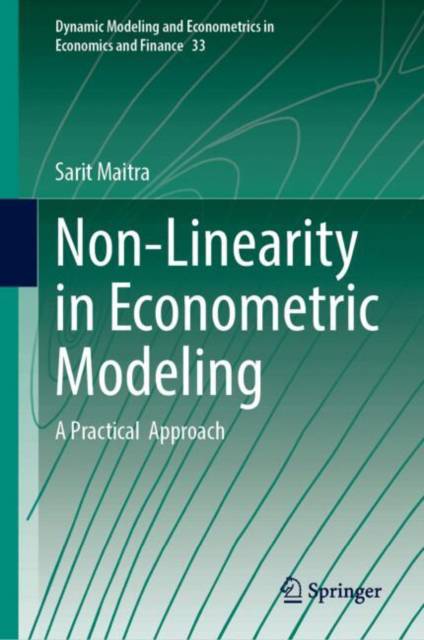
Nonlinear models are indispensable in modern finance, yet their reliance on numerical root-finding methods introduces layers of complexity that demand careful attention. This textbook offers a comprehensive and accessible guide to understanding these challenges and applying advanced econometric techniques to real-world financial and economic time series data. Designed for students, professionals, and researchers with a foundational background in statistics, econometrics, and finance, this book bridges the gap between theory and practice. It introduces key concepts progressively, making it suitable for both intermediate and advanced readers. Each chapter is written in clear, approachable language, ensuring that even those with limited prior experience in econometrics can grasp and apply the material effectively. The book is organized into five chapters that progressively guide readers through key concepts in financial time series modeling. It begins with Chapter 1, which introduces data filtering techniques, emphasizing the Kalman Filter's role in improving model accuracy. Chapter 2 explores volatility modeling, addressing common challenges in measuring and interpreting variance in financial data. Chapter 3 builds on this by presenting hybrid approaches that combine GARCH models with neural networks to enhance predictive performance. Chapter 4 applies dynamic volatility models to option valuation, offering both theoretical insights and practical tools. Finally, Chapter 5 delves into regime-switching models, including MSAR (Markov Switching Auto Regressive) and STAR (Smooth Transition Auto Regressive), to capture nonlinear behaviors and structural shifts in time series data. Together, these chapters form a cohesive narrative on modeling the dynamic behavior of financial time series, with a particular emphasis on volatility and structural shifts. Whether you're a finance professional, economist, or data scientist, this book is an essential resource for mastering the tools and techniques that drive modern financial analysis.
Spécifications
Parties prenantes
- Auteur(s) :
- Editeur:
Contenu
- Nombre de pages :
- 188
- Langue:
- Anglais
- Collection :
- Tome:
- n° 33
Caractéristiques
- EAN:
- 9783032064615
- Date de parution :
- 03-01-2026
- Format:
- Livre relié
- Format numérique:
- Genaaid
- Dimensions :
- 164 mm x 239 mm
- Poids :
- 462 g


Seulement chez Librairie Club
+ 151 points sur votre carte client de Librairie Club
Cadeau

Cadeau


Les avis
Nous publions uniquement les avis qui respectent les conditions requises. Consultez nos conditions pour les avis.