


- Retrait en 2 heures
- Assortiment impressionnant
- Paiement sécurisé
- Toujours un magasin près de chez vous
- Retrait en 2 heures
- Assortiment impressionnant
- Paiement sécurisé
- Toujours un magasin près de chez vous



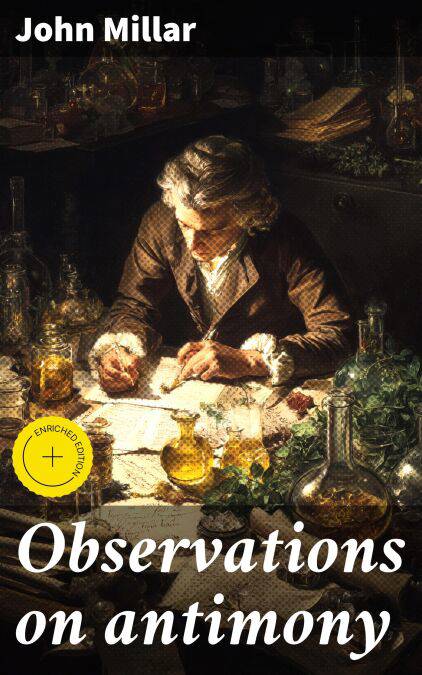
Observations on antimony EBOOK
Enriched edition. Read before the Medical Society of London, and published at their request
John Millar
Ebook | Anglais
0,49 €
0,99 €
Format
Description
In "Observations on Antimony," John Millar explores the multifaceted properties and medical applications of antimony, a metalloid lauded for both its potential benefits and its dangers. Millar's prose reflects the scientific rigor of the 18th century, utilizing an empirical approach that is indicative of the Enlightenment period's emphasis on observation. He synthesizes established knowledge with personal experimentation, often challenging contemporary medicinal practices. The work serves not only as a treatise on the element's pharmacological efficacy but also as a commentary on the medical theories of his time, making it a pivotal text in the history of chemistry and medicine. John Millar, a Scottish physician and chemist, drew inspiration from the prevailing scientific discourse of his day, influenced by luminaries such as Paracelsus and Boyle. His keen interest in the intersection of chemistry and medicine informed his quest to elucidate the role of antimony in health and illness. Millar's position within the burgeoning field of chemistry was unique, and his dedication to empirical observation contributed to the development of new medicinal strategies in an era rife with superstition and dogma. "Observations on Antimony" is essential reading for historians of science and medical practitioners alike. Millar's meticulous examination of antimony transcends mere analysis; it invites readers to appreciate the nexus of science and medicine, while providing a window into a transformative period in history. This work is crucial for those interested in the evolution of pharmacology and the ongoing dialogues regarding the safety and efficacy of medicinal substances.
In this enriched edition, we have carefully created added value for your reading experience:
- Hand‐picked Memorable Quotes shine a spotlight on moments of literary brilliance.
- Interactive footnotes clarify unusual references, historical allusions, and archaic phrases for an effortless, more informed read.
In this enriched edition, we have carefully created added value for your reading experience:
- Hand‐picked Memorable Quotes shine a spotlight on moments of literary brilliance.
- Interactive footnotes clarify unusual references, historical allusions, and archaic phrases for an effortless, more informed read.
Spécifications
Parties prenantes
- Auteur(s) :
- Editeur:
Contenu
- Nombre de pages :
- 202
- Langue:
- Anglais
Caractéristiques
- EAN:
- 4064066246457
- Date de parution :
- 04-12-19
- Format:
- Ebook
- Protection digitale:
- Digital watermarking
- Format numérique:
- ePub


Seulement chez Librairie Club
Cadeau


Les avis
Nous publions uniquement les avis qui respectent les conditions requises. Consultez nos conditions pour les avis.