


- Retrait en 2 heures
- Assortiment impressionnant
- Paiement sécurisé
- Toujours un magasin près de chez vous
- Retrait en 2 heures
- Assortiment impressionnant
- Paiement sécurisé
- Toujours un magasin près de chez vous



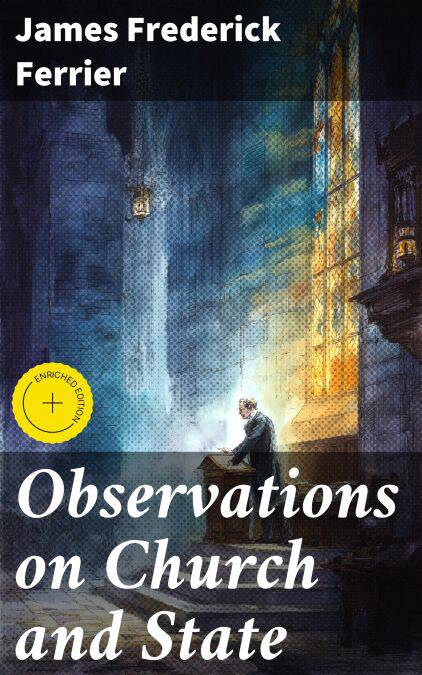
Observations on Church and State EBOOK
Enriched edition. Suggested by the Duke of Argyll's essay on the ecclesiastical history of Scotland
James Frederick Ferrier
Ebook | Anglais
0,49 €
Description
In "Observations on Church and State," James Frederick Ferrier presents a critical examination of the intricate relationship between ecclesiastical authority and civil governance during the early 19th century. Ferrier employs a blend of philosophical inquiry and philosophical rhetoric, embodying the Enlightenment ideals of reason and empiricism. Through a methodical dissection of historical precedents and contemporary practices, he elucidates the tensions inherent in the intertwining of religious and political institutions, championing the necessity for a secular state that respects individual liberties while acknowledging the social influence of religion. James Frederick Ferrier was a Scottish philosopher and metaphysician, whose intellectual pursuits were deeply rooted in the philosophical debates of his time, particularly influenced by the works of John Stuart Mill and the moral implications of utilitarianism. Ferrier's background as an educated man in a Scotland marked by religious strife informed his perspectives on the evolving dynamics between faith and governance, motivating him to write this compelling work as a plea for rational discourse and reform. This book is essential for readers interested in political philosophy, theology, and the historical foundations of church-state relations. Ferrier's discerning insights evoke critical reflection on contemporary issues surrounding secularism and religious freedom, making it a thought-provoking read for academics, students, and anyone invested in understanding the complexities of modern governance.
In this enriched edition, we have carefully created added value for your reading experience:
- A succinct Introduction situates the work's timeless appeal and themes.
- The Synopsis outlines the central plot, highlighting key developments without spoiling critical twists.
- A detailed Historical Context immerses you in the era's events and influences that shaped the writing.
- A thorough Analysis dissects symbols, motifs, and character arcs to unearth underlying meanings.
- Reflection questions prompt you to engage personally with the work's messages, connecting them to modern life.
- Hand‐picked Memorable Quotes shine a spotlight on moments of literary brilliance.
- Interactive footnotes clarify unusual references, historical allusions, and archaic phrases for an effortless, more informed read.
In this enriched edition, we have carefully created added value for your reading experience:
- A succinct Introduction situates the work's timeless appeal and themes.
- The Synopsis outlines the central plot, highlighting key developments without spoiling critical twists.
- A detailed Historical Context immerses you in the era's events and influences that shaped the writing.
- A thorough Analysis dissects symbols, motifs, and character arcs to unearth underlying meanings.
- Reflection questions prompt you to engage personally with the work's messages, connecting them to modern life.
- Hand‐picked Memorable Quotes shine a spotlight on moments of literary brilliance.
- Interactive footnotes clarify unusual references, historical allusions, and archaic phrases for an effortless, more informed read.
Spécifications
Parties prenantes
- Auteur(s) :
- Editeur:
Contenu
- Nombre de pages :
- 38
- Langue:
- Anglais
Caractéristiques
- EAN:
- 4064066063979
- Date de parution :
- 07-12-20
- Format:
- Ebook
- Protection digitale:
- Digital watermarking
- Format numérique:
- ePub



Seulement chez Librairie Club
Cadeau


Les avis
Nous publions uniquement les avis qui respectent les conditions requises. Consultez nos conditions pour les avis.