


- Retrait en 2 heures
- Assortiment impressionnant
- Paiement sécurisé
- Toujours un magasin près de chez vous
- Retrait en 2 heures
- Assortiment impressionnant
- Paiement sécurisé
- Toujours un magasin près de chez vous



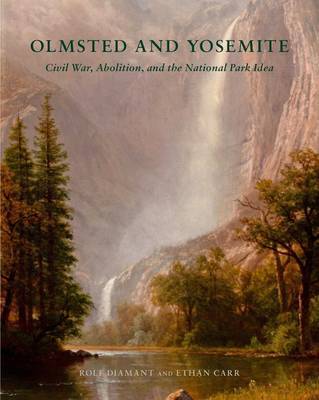
Olmsted and Yosemite
Civil War, Abolition, and the National Park Idea
Rolf Diamant, Ethan Carr
Livre relié | Anglais
38,95 €
+ 77 points
Passer une commande en un clic
Payer en toute sécurité


Livraison en Belgique: 3,99 €
Livraison en magasin gratuite
Description
How the work and writings of Frederick Law Olmsted, the founder of American landscape architecture, inspired the creation of parks to benefit the public. During the turbulent decade the United States engaged in a civil war, abolished slavery, and remade the government, the public park emerged as a product of these dramatic changes. New York's Central Park and Yosemite in California both embodied the "new birth of freedom" that had inspired the Union during its greatest crisis, epitomizing the duty of republican government to enhance the lives and well-being of all its citizens. A central thread connecting the apparently disparate phenomena of abolition, the Civil War, and the dawn of urban and national parks is the life of Frederick Law Olmsted. Before collaborating on the design of Central Park, Olmsted had traveled as a journalist through the Southern states and published firsthand accounts of the inhumane conditions he found there, arguing that slavery had become an insurmountable obstacle to national progress. In 1864, he was asked to prepare a plan for a park in Yosemite Valley, created by Congress to redefine and expand the privileges of American citizenship associated with Union victory. His groundbreaking Yosemite Report effectively created an intellectual framework for a national park system. Here Olmsted expressed the core tenet of the national park idea and park making generally: that the republic should provide its citizenry access to the restorative benefits of nature. His vision was realized with the passage in 1916 of legislation that created the National Park Service, drafted in large measure by Olmsted Jr. and based on the ideas and aspirations fully expressed fifty years earlier in his father's report. The National Park Service has been slow to embrace the senior Olmsted's role in this history. In the early twentieth century, a period of "reconciliation" between North and South, National Park Service administrators preferred more anodyne narratives of pristine Western landscapes discovered by rugged explorers and spontaneously reimagined as national parks. They wanted a history disassociated from urban parks and the problems of industrializing cities and unburdened by the legacies of slavery and Native American dispossession. Marking the bicentennial of Olmsted's birth, the forthcoming book sets the historical record straight as it offers a new interpretation of how the American park--urban and national--came to figure so prominently in our cultural identity, and why this more complex and inclusive story deserves to be told.
Spécifications
Parties prenantes
- Auteur(s) :
- Editeur:
Contenu
- Nombre de pages :
- 192
- Langue:
- Anglais
Caractéristiques
- EAN:
- 9781952620348
- Date de parution :
- 10-03-22
- Format:
- Livre relié
- Format numérique:
- Genaaid
- Dimensions :
- 156 mm x 238 mm
- Poids :
- 453 g


Seulement chez Librairie Club
+ 77 points sur votre carte client de Librairie Club
Cadeau

Cadeau


Les avis
Nous publions uniquement les avis qui respectent les conditions requises. Consultez nos conditions pour les avis.